A specialist-managed gynecomastia treatment plan designed around your underlying cause—using evidence-based options to improve chest aesthetics.
Are you struggling with “man boobs”?
Despite rigorous exercise and diet control, many men find that their chest contour remains unchanged. This can significantly affect confidence and social interactions.
Do any of these sound familiar?
Chest bulges are visible in fitted shirts.
You avoid taking off your shirt in summer or while swimming.
The chest shape affects your overall body proportions.
You feel embarrassed or self-conscious about your appearance.
These signs may be related to gynecomastia (enlarged breasts in men) rather than just excess weight.
Arrange a preliminary assessment to understand the cause and your options.
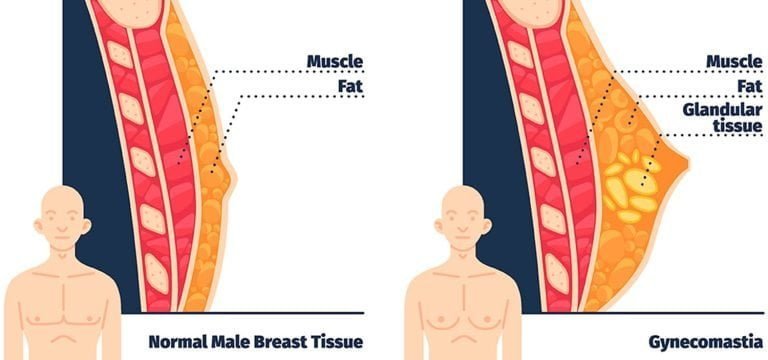
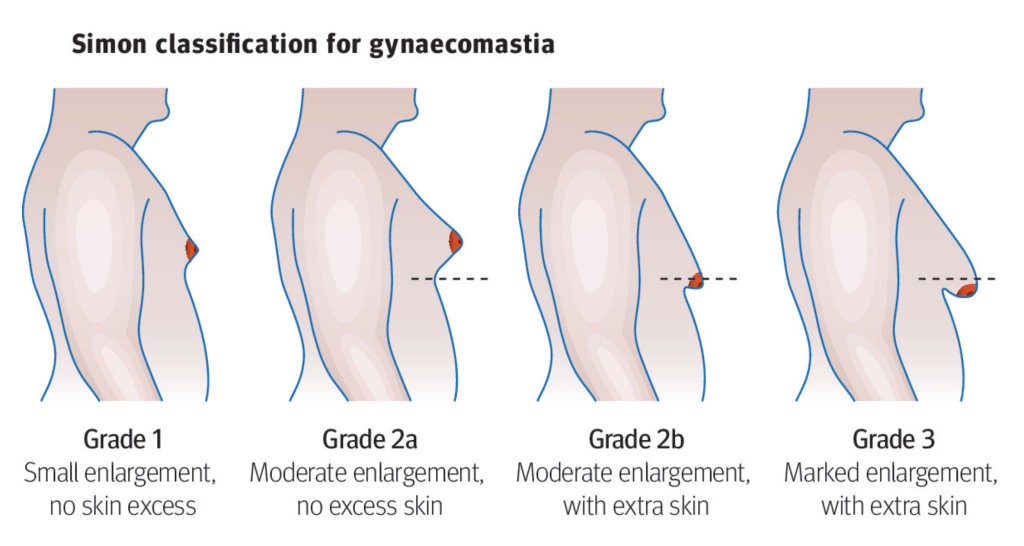
Gynecomastia is a condition where the male chest appears enlarged due to the proliferation of breast gland tissue, fat accumulation, or a combination of both. This creates a contour that may resemble a female breast, commonly referred to in Hong Kong as“man boobs”.
Causes are typically categorised into:
Primary gynecomastia: No specific disease-related cause is identified. It is often seen in newborns (due to maternal hormones) or during puberty due to hormonal fluctuations. In many cases, this resolves on its own.
Secondary gynecomastia: Triggered by specific factors such as obesity, age-related hormonal shifts, excessive steroid use, chronic liver or kidney disease, or medication side effects. This type generally requires professional evaluation.
Source: https://healthjade.net/gynecomastia/
Understanding Secondary Gynecomastia
Most men seeking treatment fall into the secondary category, where an identifiable trigger is present.
Obesity: Excess body fat accumulates in the chest. Furthermore, adipose (fat) tissue can accelerate the conversion of male hormones into female hormones, stimulating glandular growth.
Ageing: From around age 50, testosterone levels naturally decline, altering the hormonal balance.
Medical & lifestyle factors: The use of anabolic steroids (common in bodybuilding), certain medications, or underlying health issues like liver disease can increase the risk.
As different causes require different approaches, a clinical assessment by a doctor is essential.
While gynecomastia rarely impacts physical health, it can cause significant psychological distress.
Mild cases: Lifestyle modifications, such as aerobic exercise and dietary changes, may help if the issue is primarily fat-related.
Persistent cases: If the condition persists despite lifestyle changes—often due to fibrous glandular tissue—a doctor may recommend surgical intervention to correct the chest contour.
The following procedures are typically performed under local anesthesia using the tumescent technique. This involves injecting a specialised, diluted anesthetic solution into the area to ensure numbness and minimise bleeding.
1) Liposuction (Fat-Dominant)
Procedure: A tiny incision (approximately 0.5 cm) is made near the armpit. A cannula is used to remove excess fat and sculpt the chest.
Duration: Approximately 1.5 hours.
2) Liposuction + Gland Excision (Mixed Type)
Procedure: Liposuction is first performed to remove fat. Subsequently, a discreet 2-3 cm incision is made along the lower edge of the areola to physically remove the enlarged glandular tissue.
Duration: Approximately 2 hours.
Outcome: The excised gland tissue rarely regenerates, offering long-lasting results. However, significant weight gain post-surgery can cause fat to re-accumulate.
Comparison of Treatment Types
Type
Recommended Treatment
Characteristics
Fat-type
Liposuction
Soft chest texture, primarily fat, good skin elasticity
Gland-type
Liposuction + gland excision
Firmer chest texture, palpable gland tissue, often seen in
athletic men
Mixed-type
Liposuction + gland excision
Presence of both fat and enlarged gland tissue (most
common)
Clinical Examples
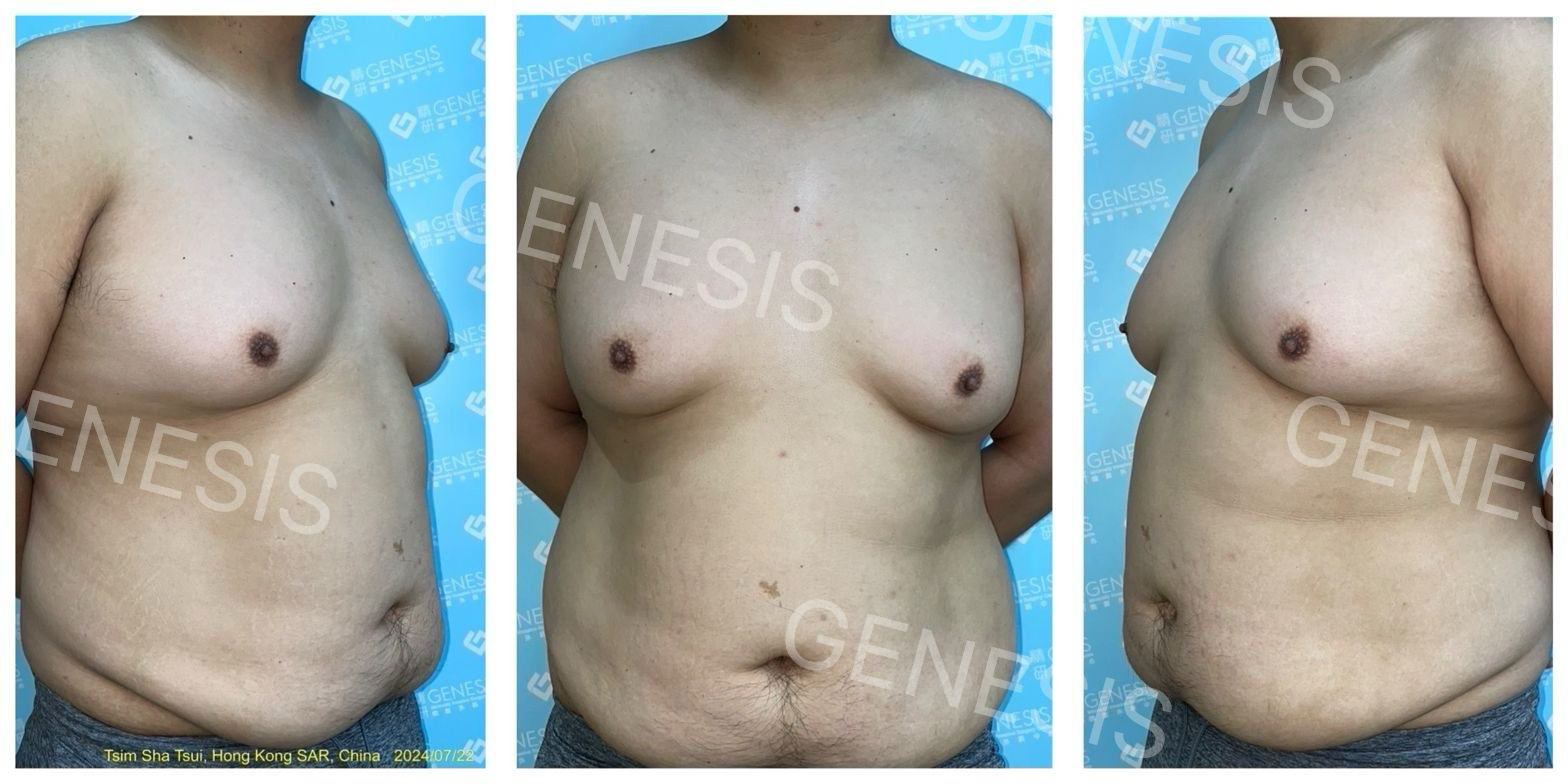
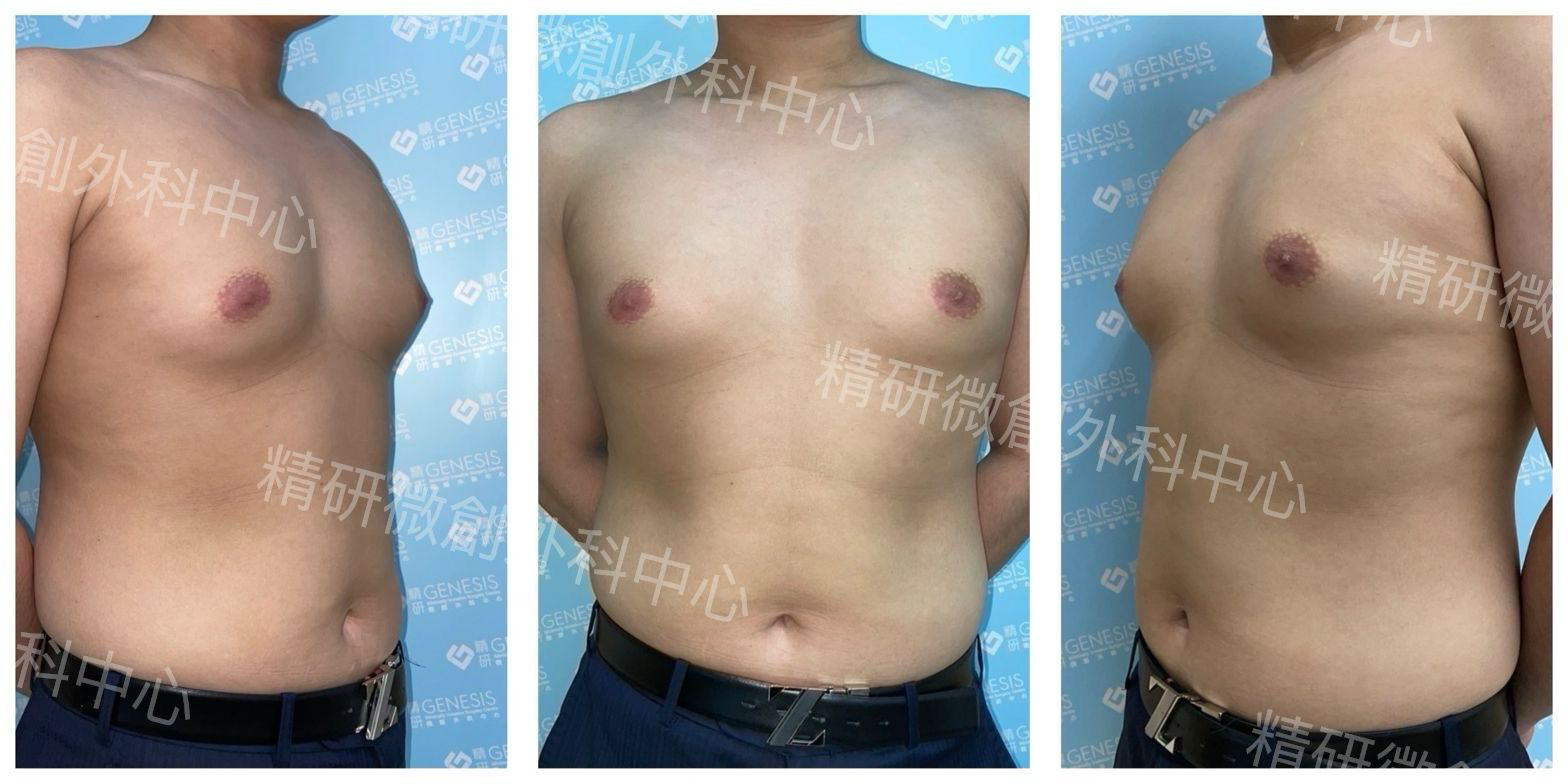
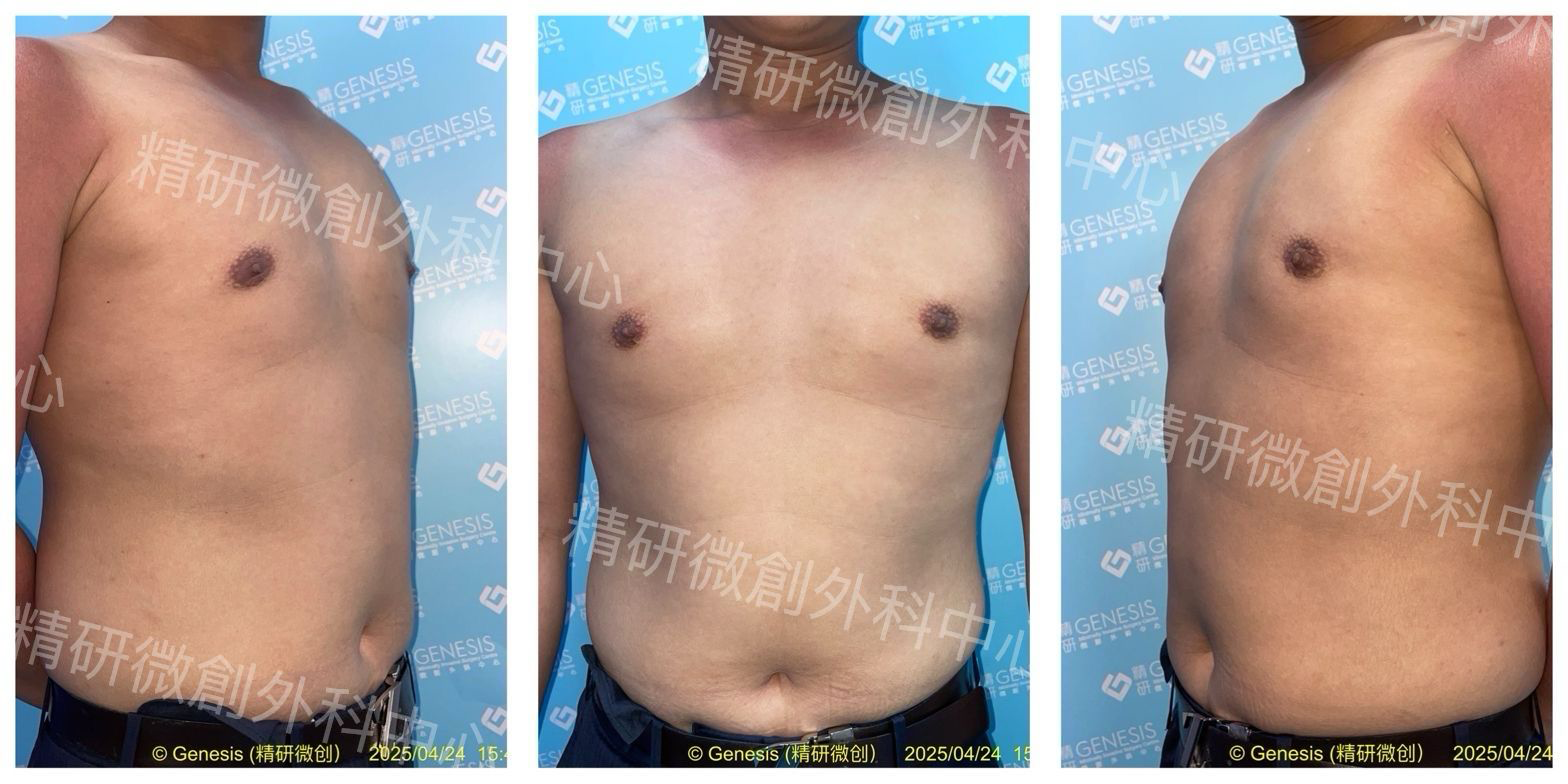
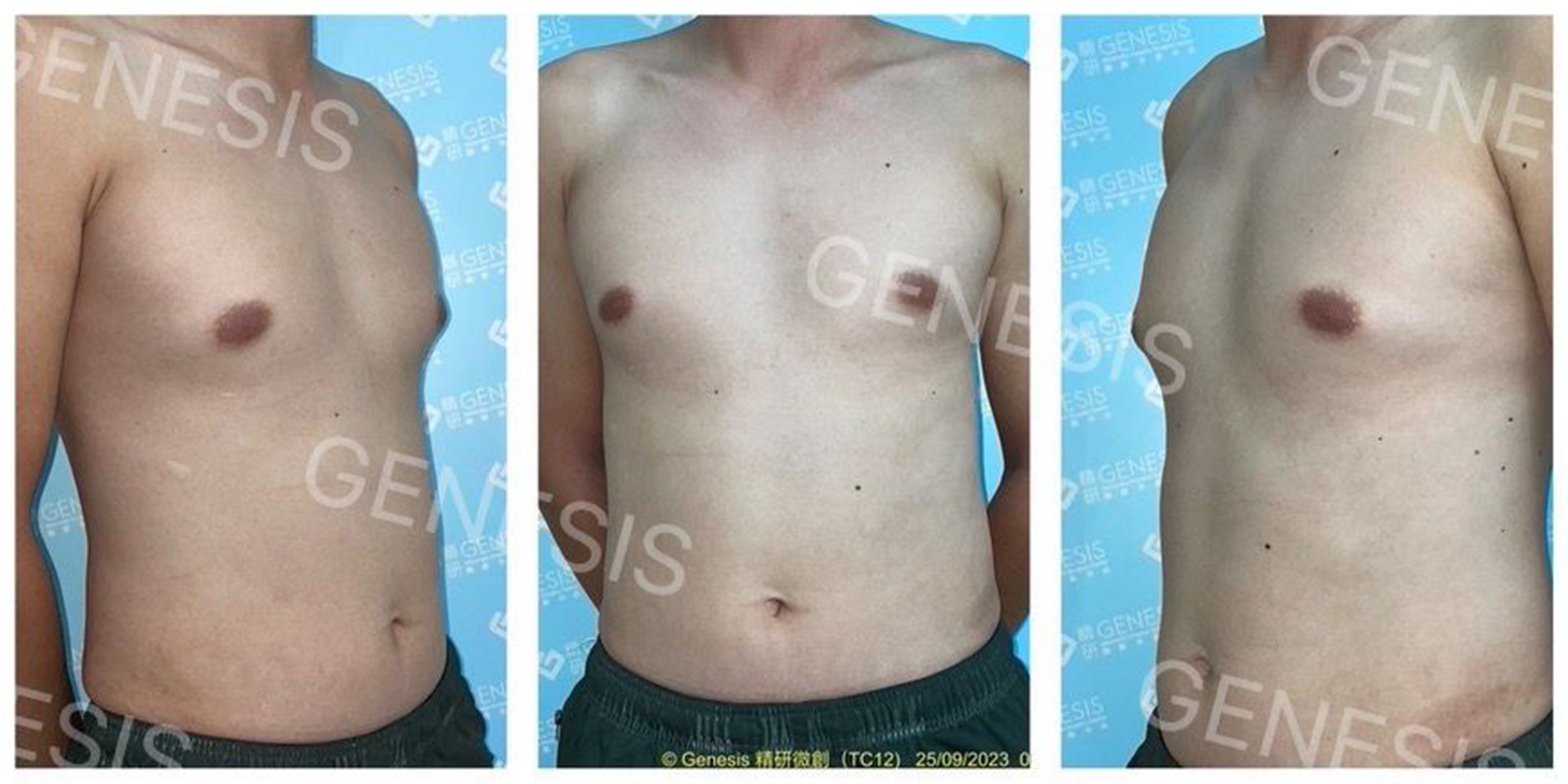
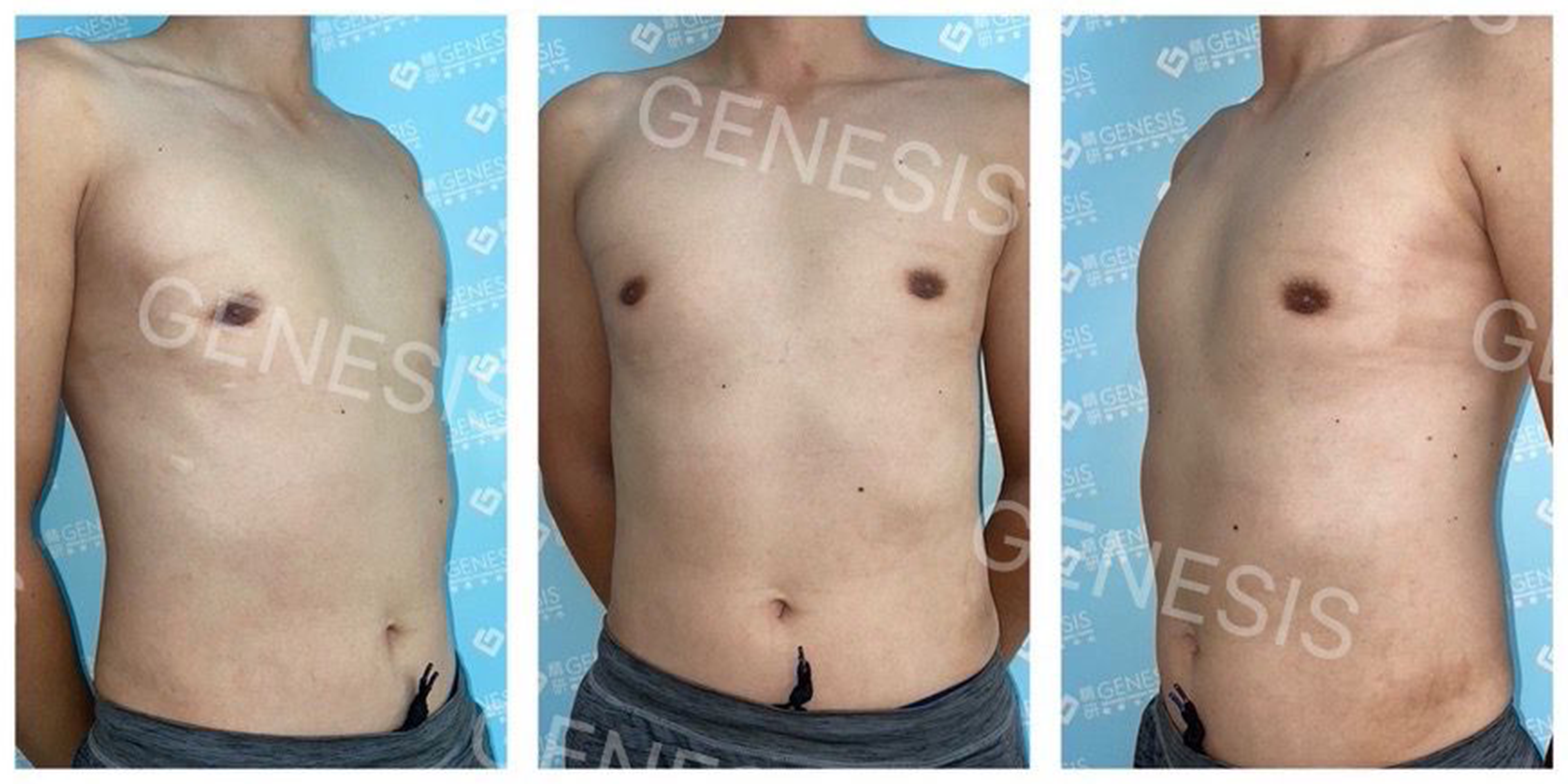
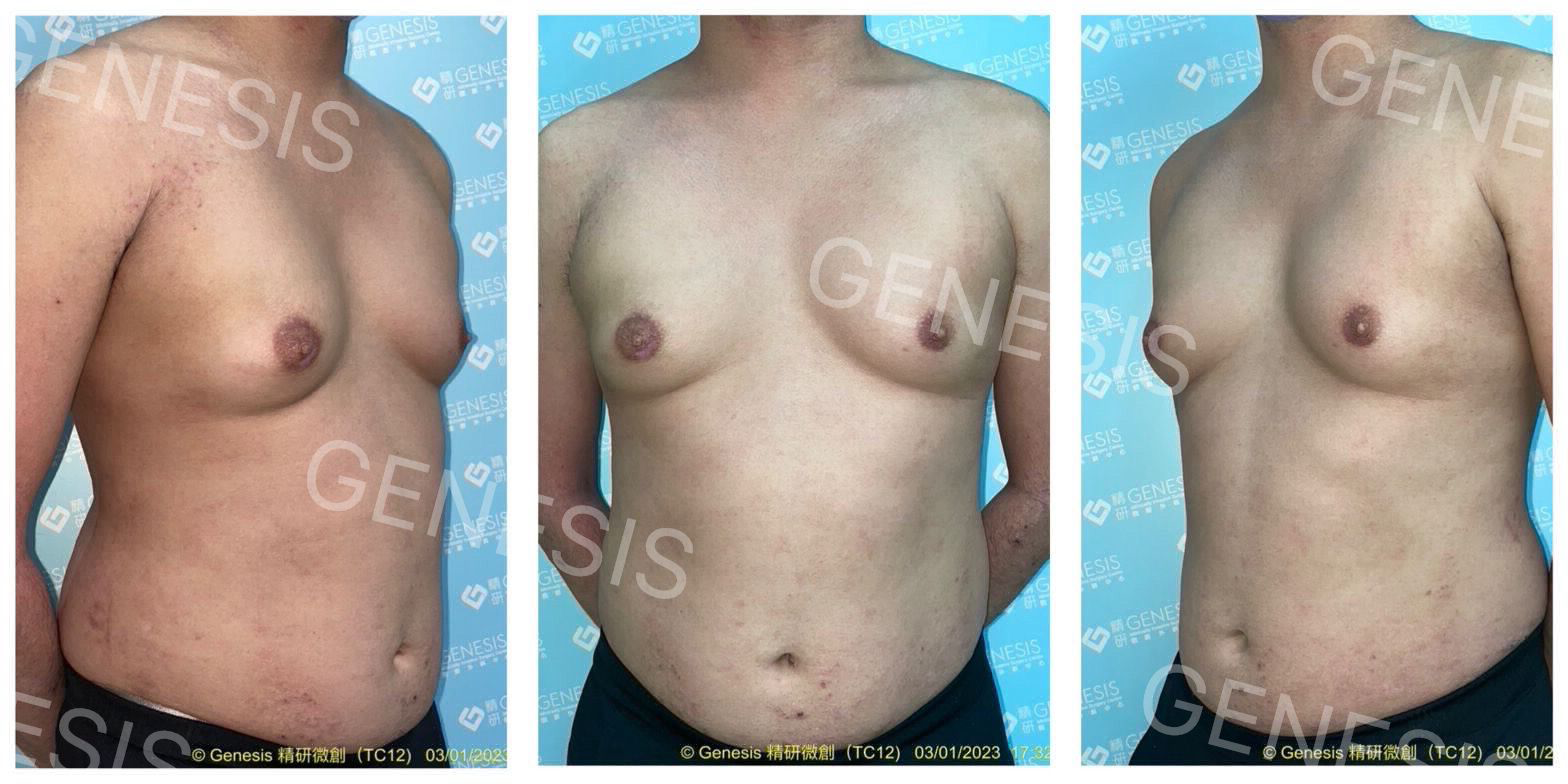
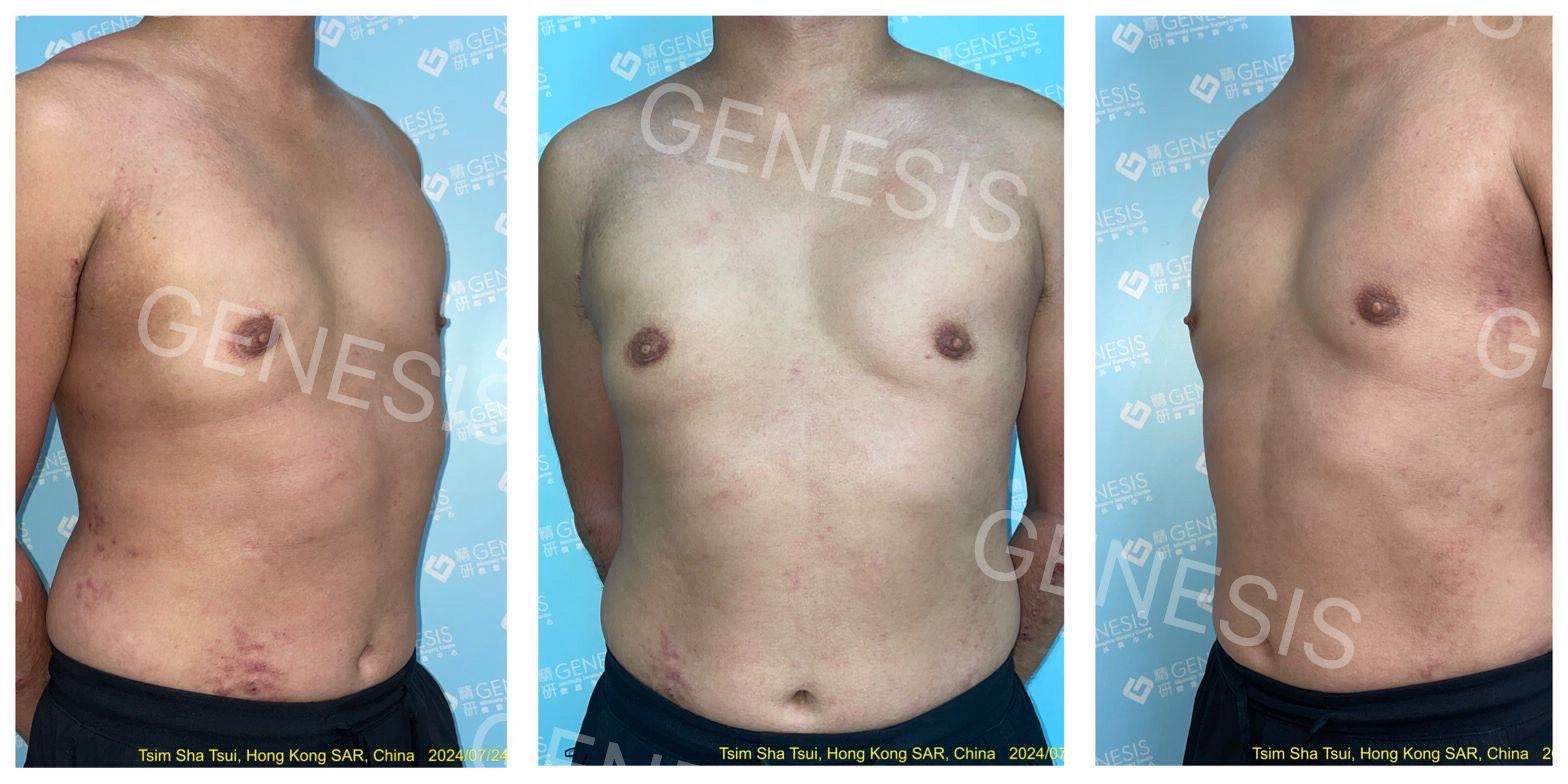
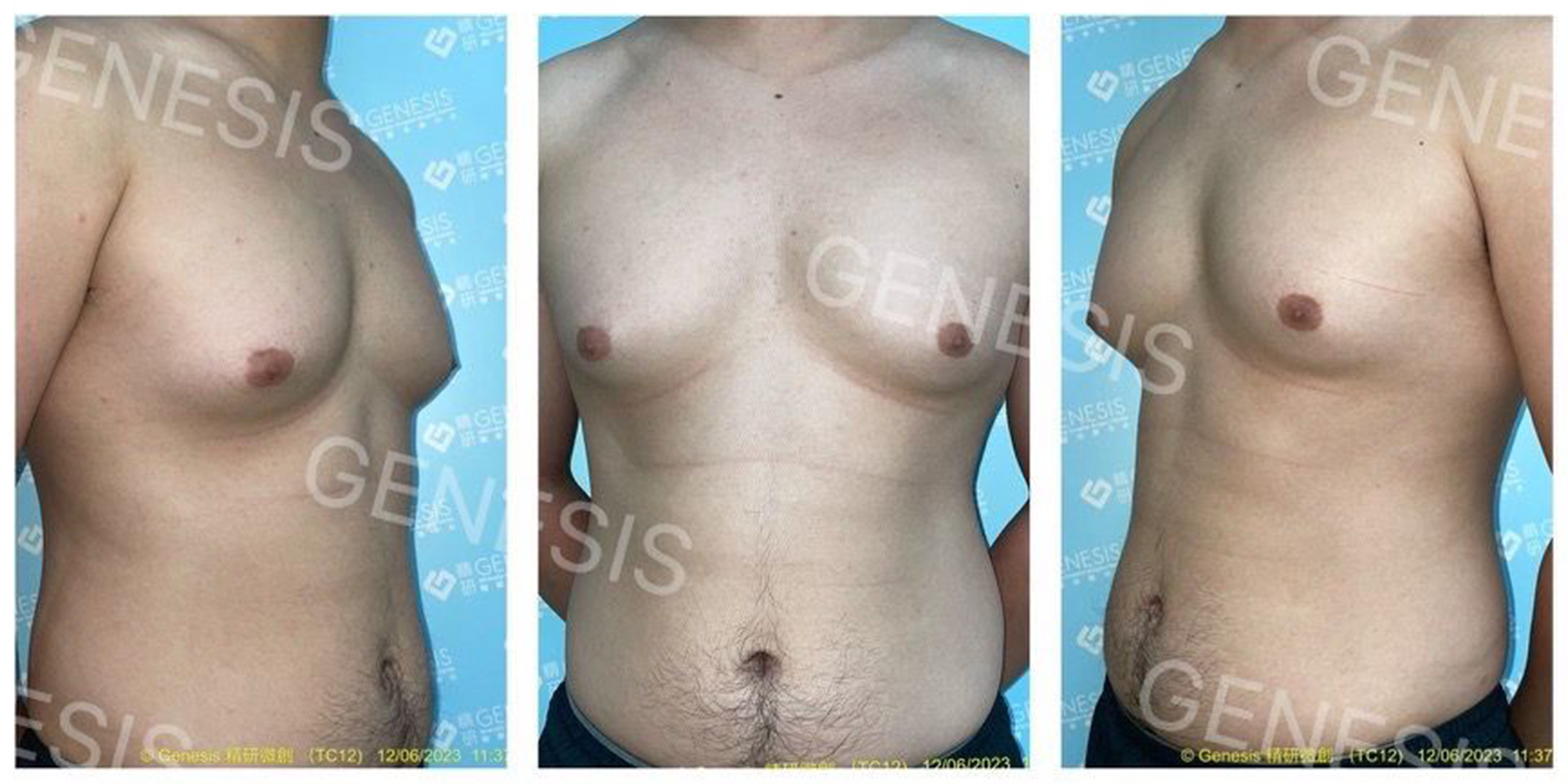
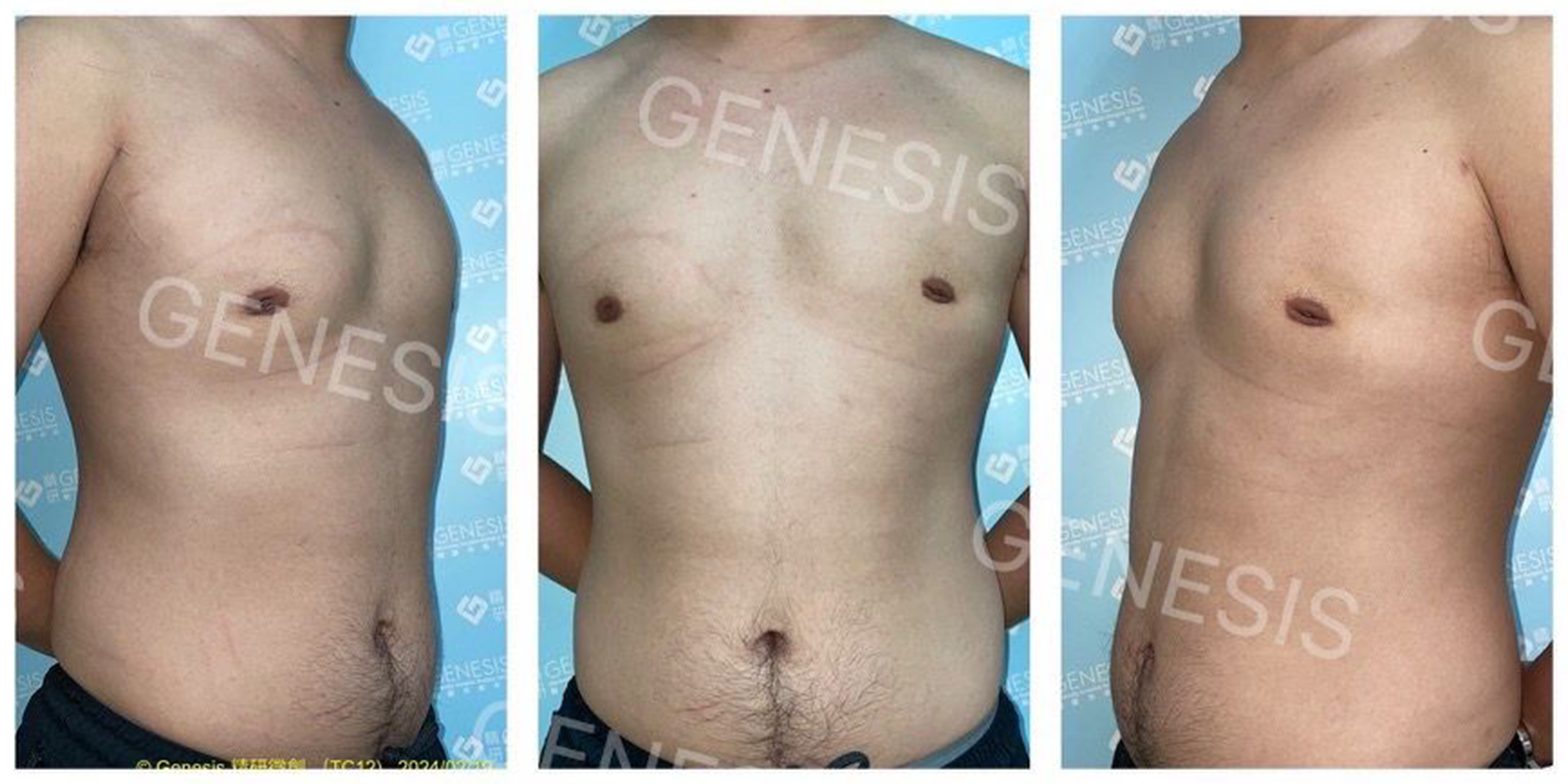
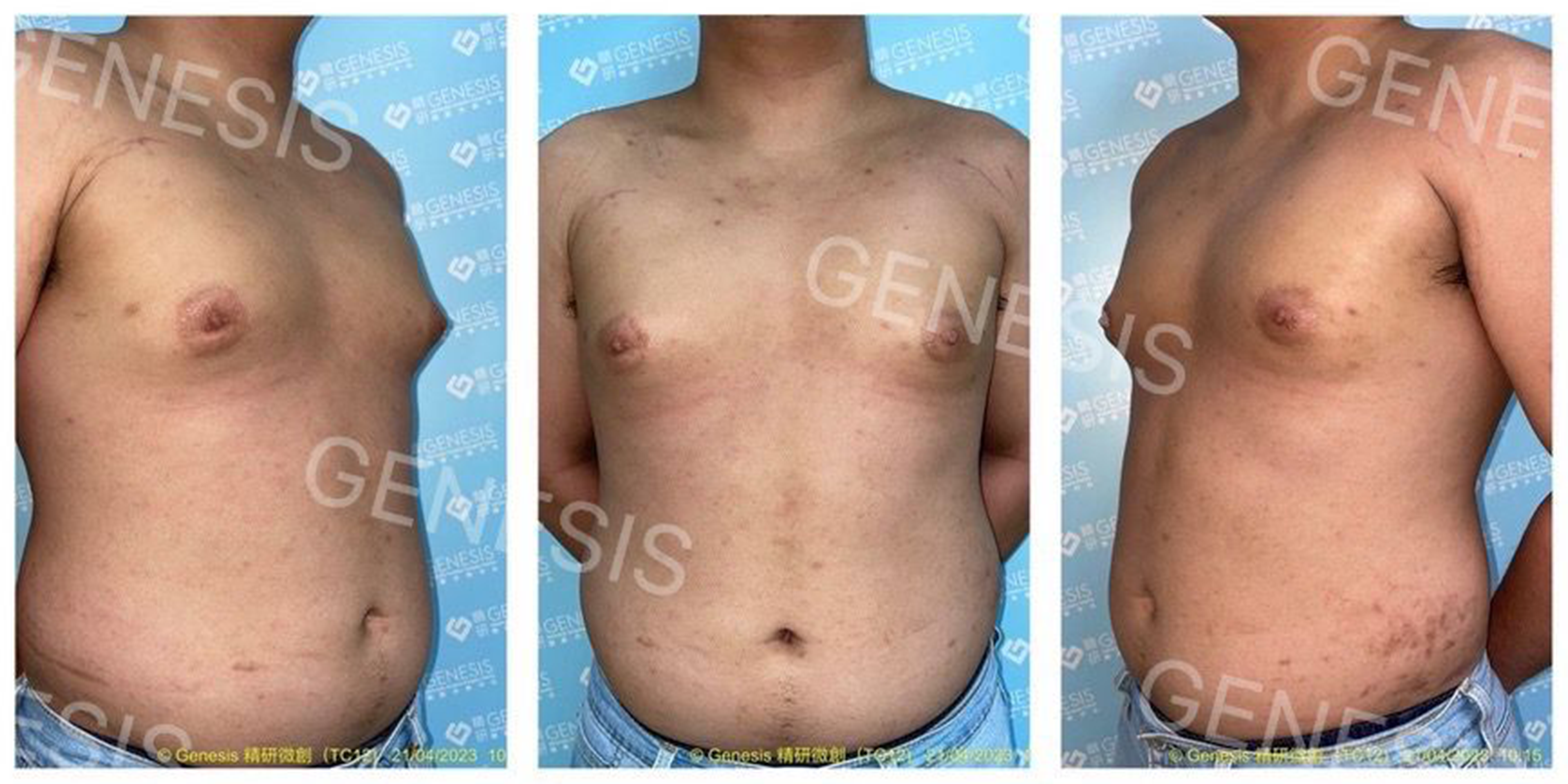
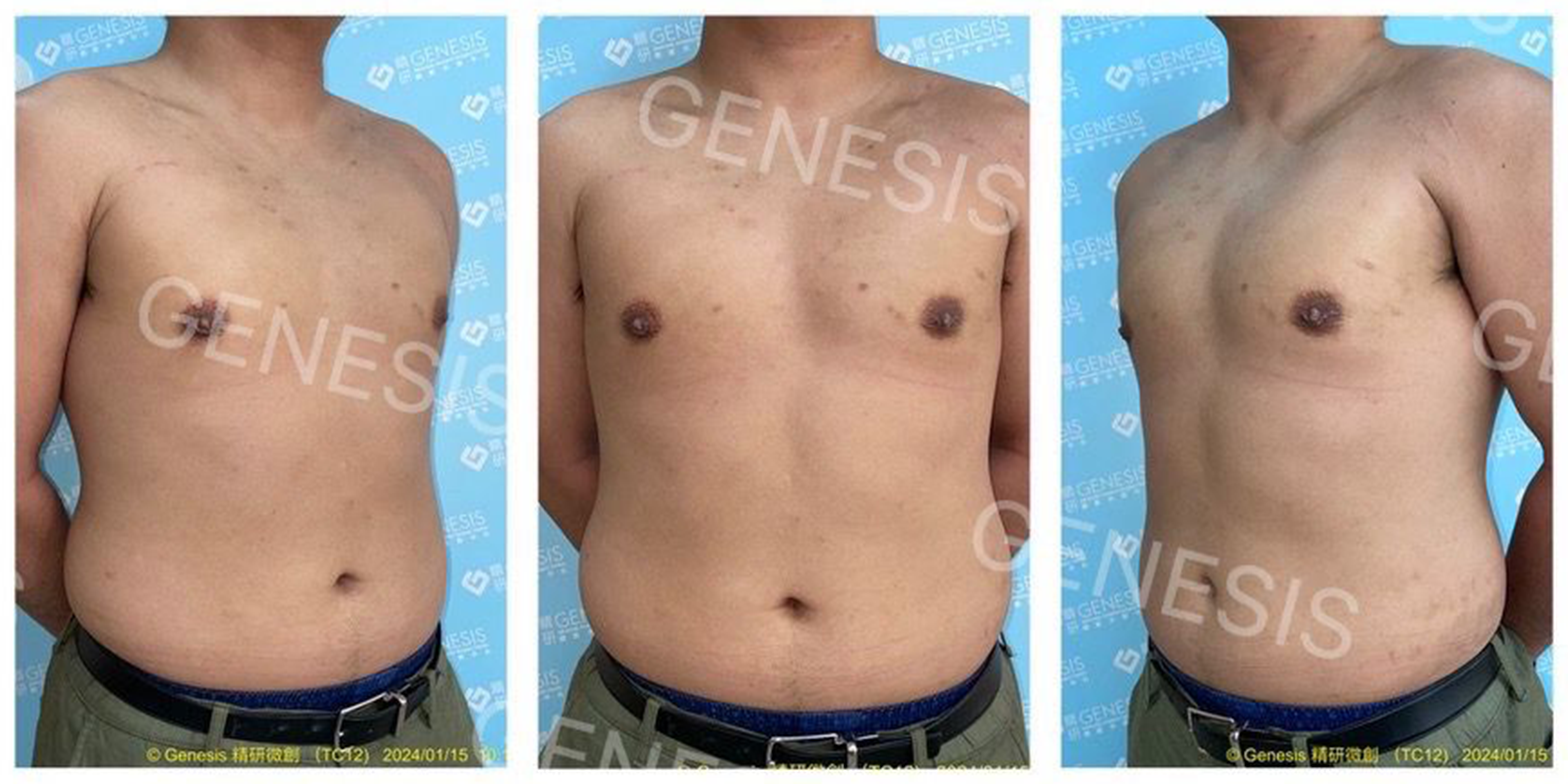
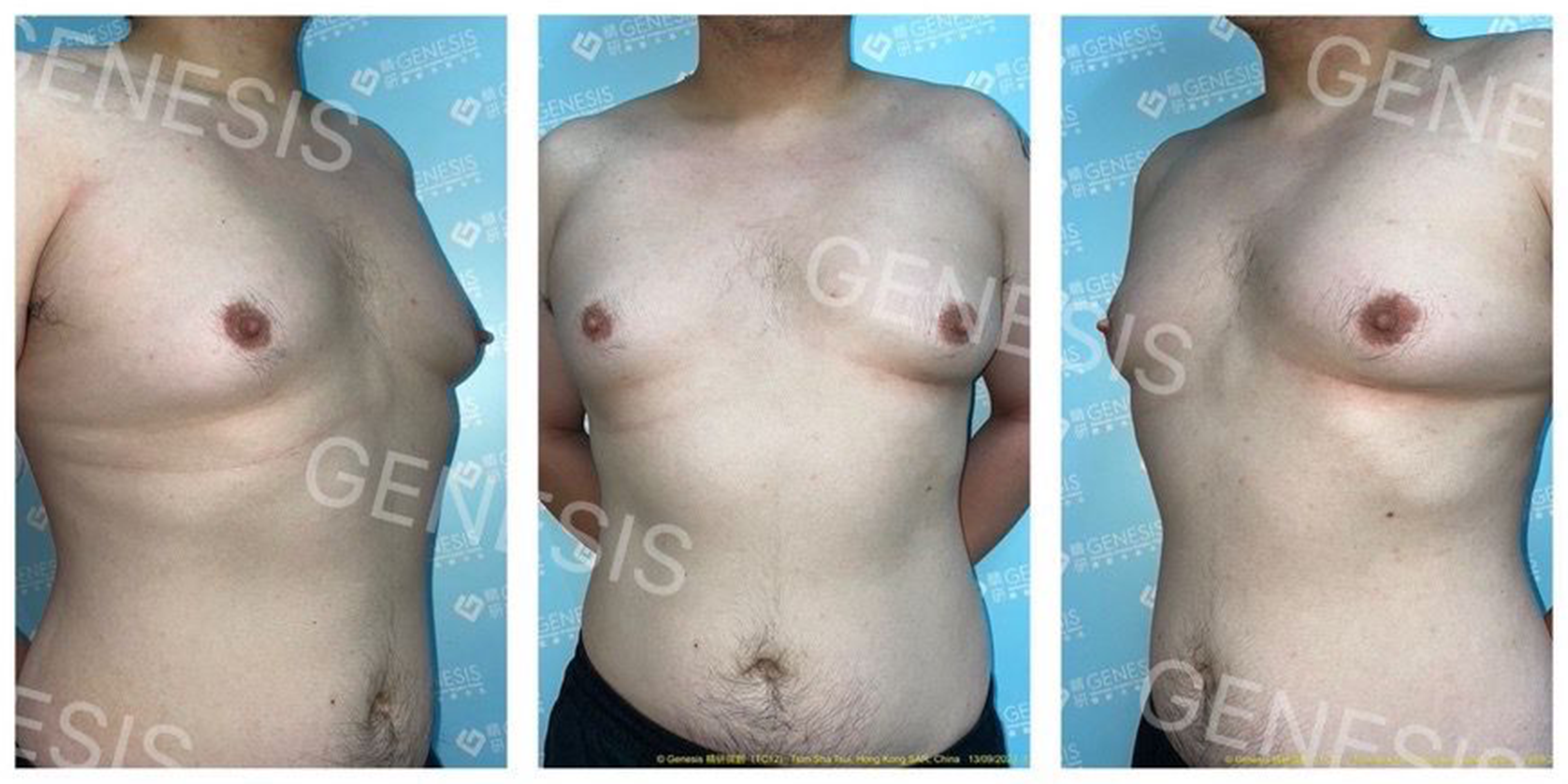
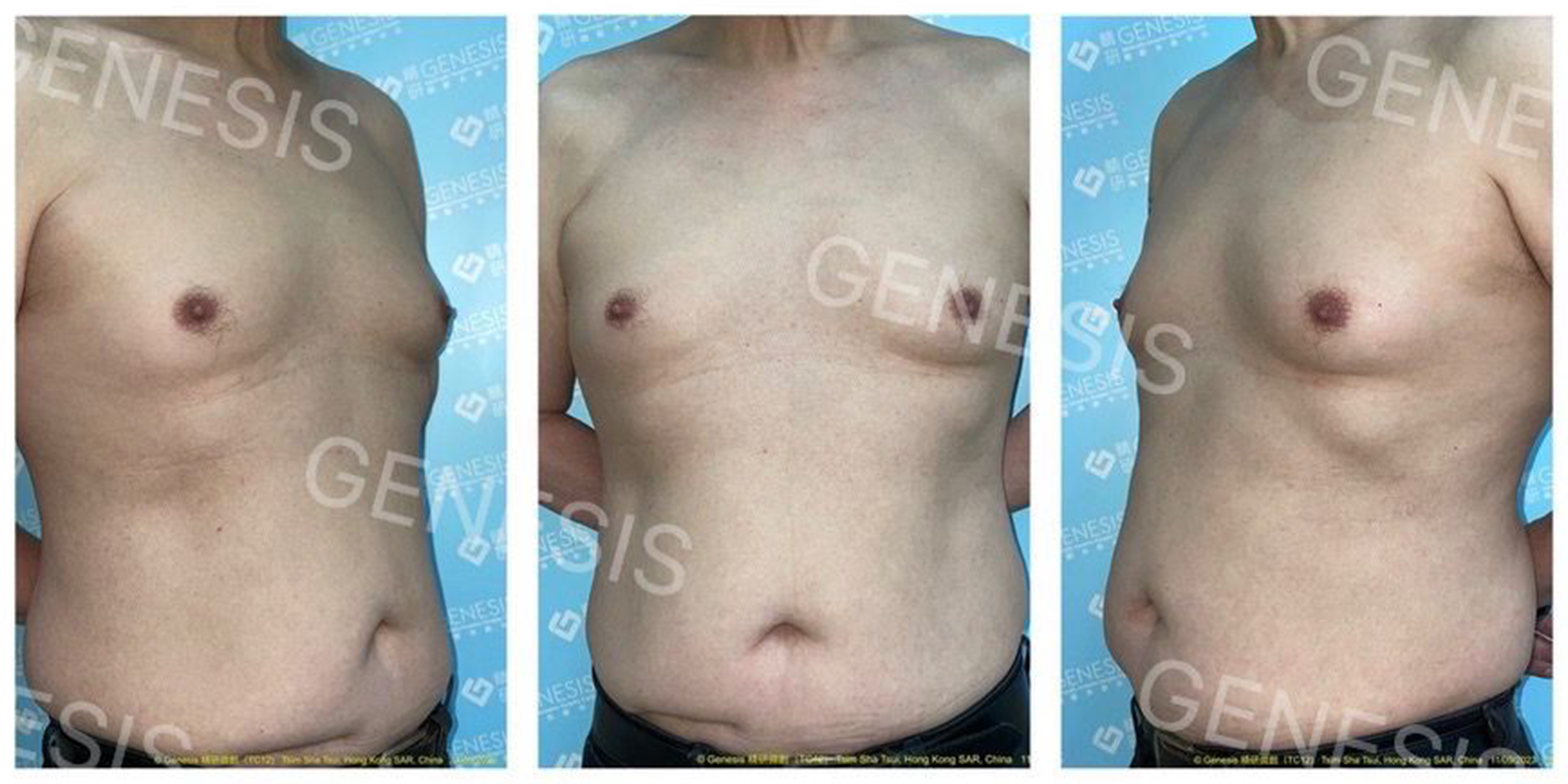
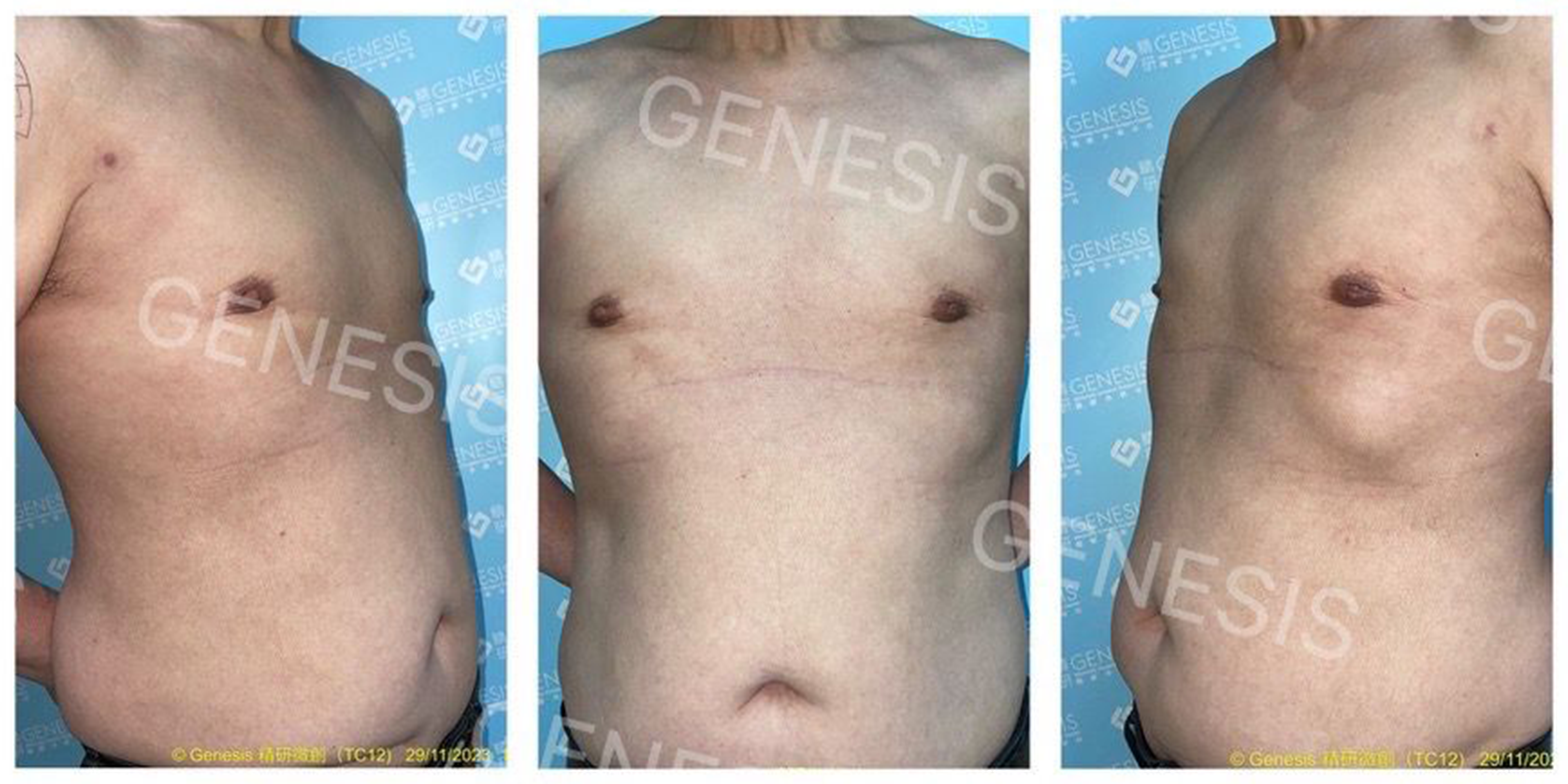
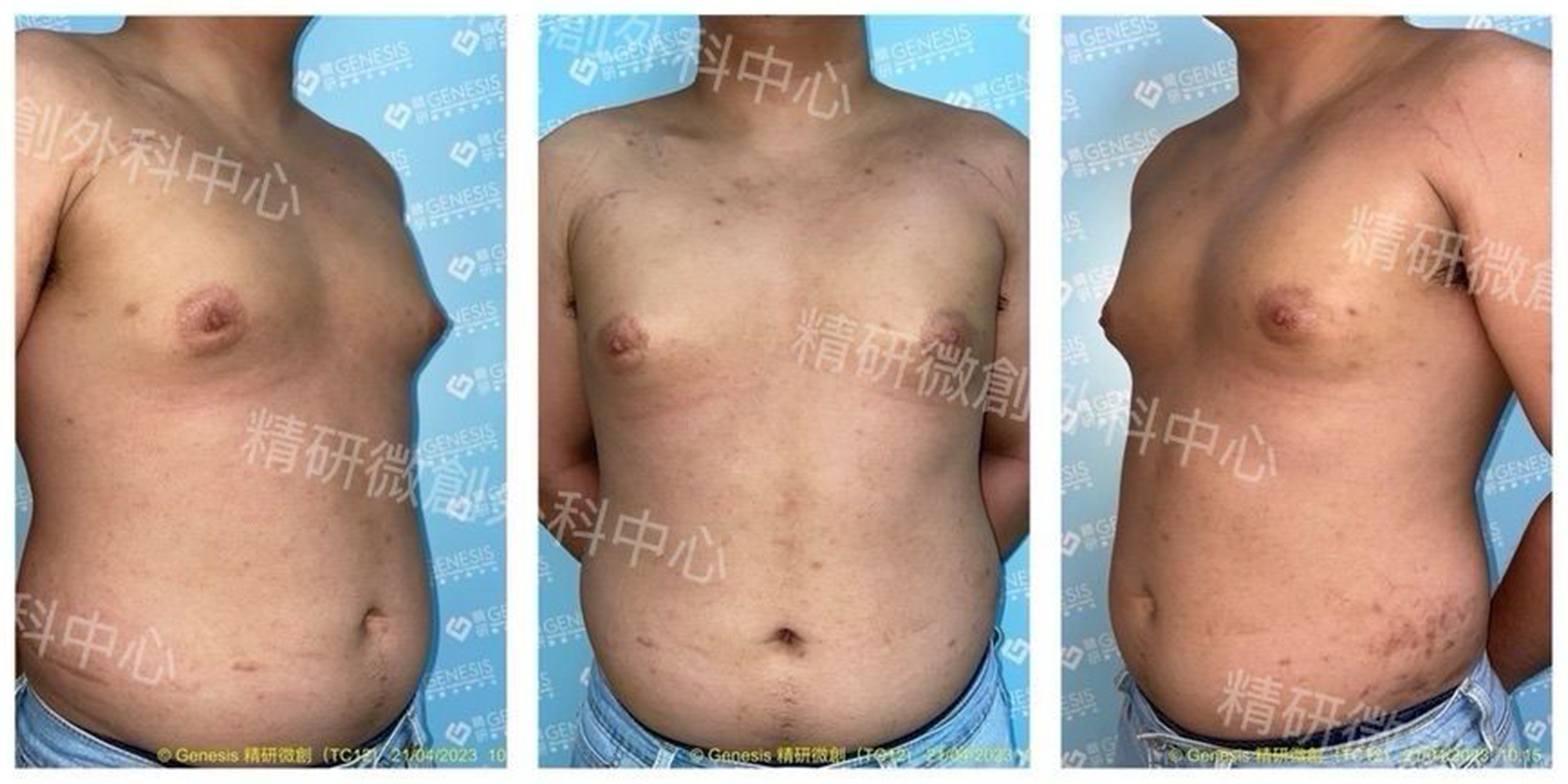
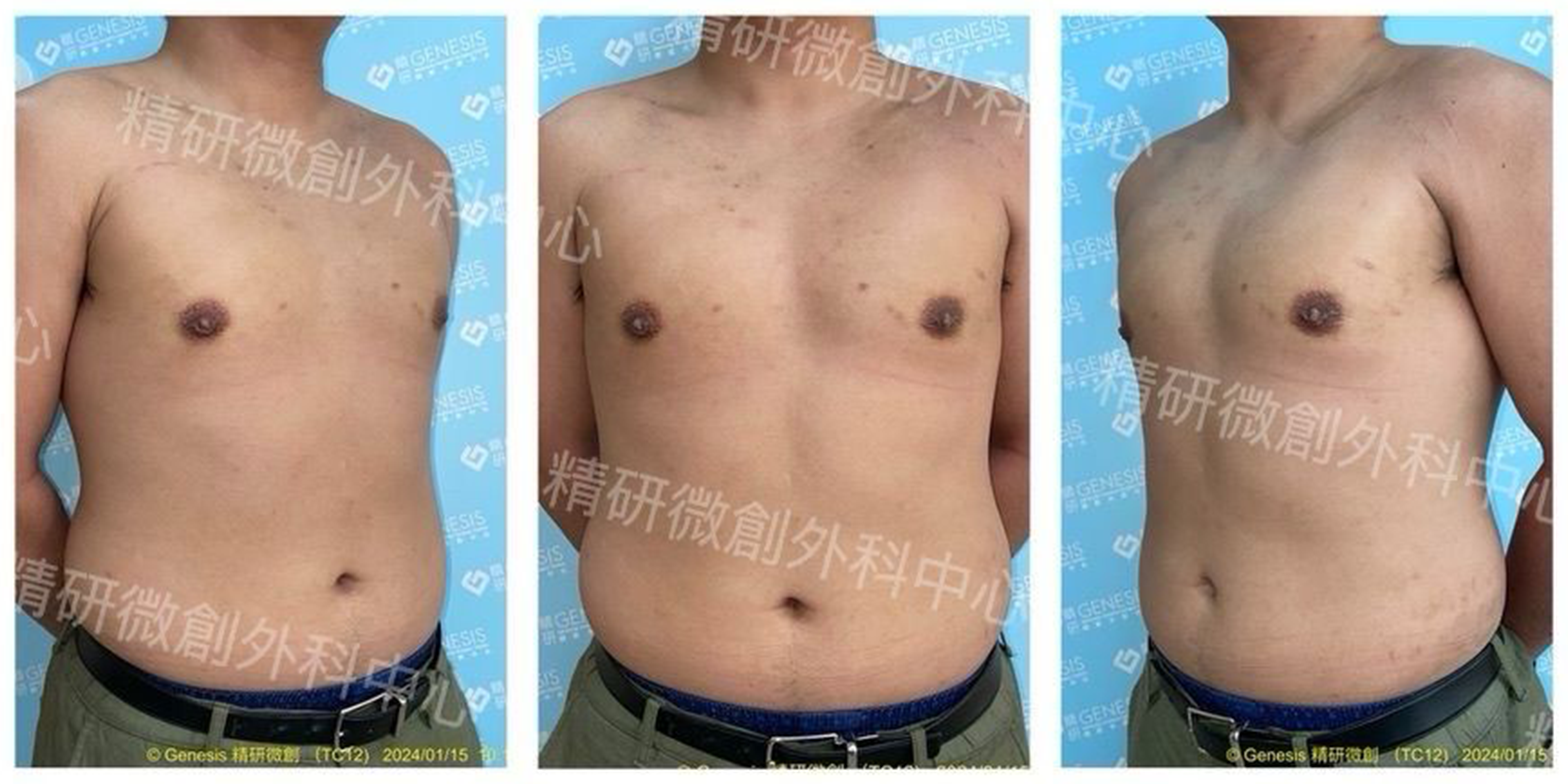
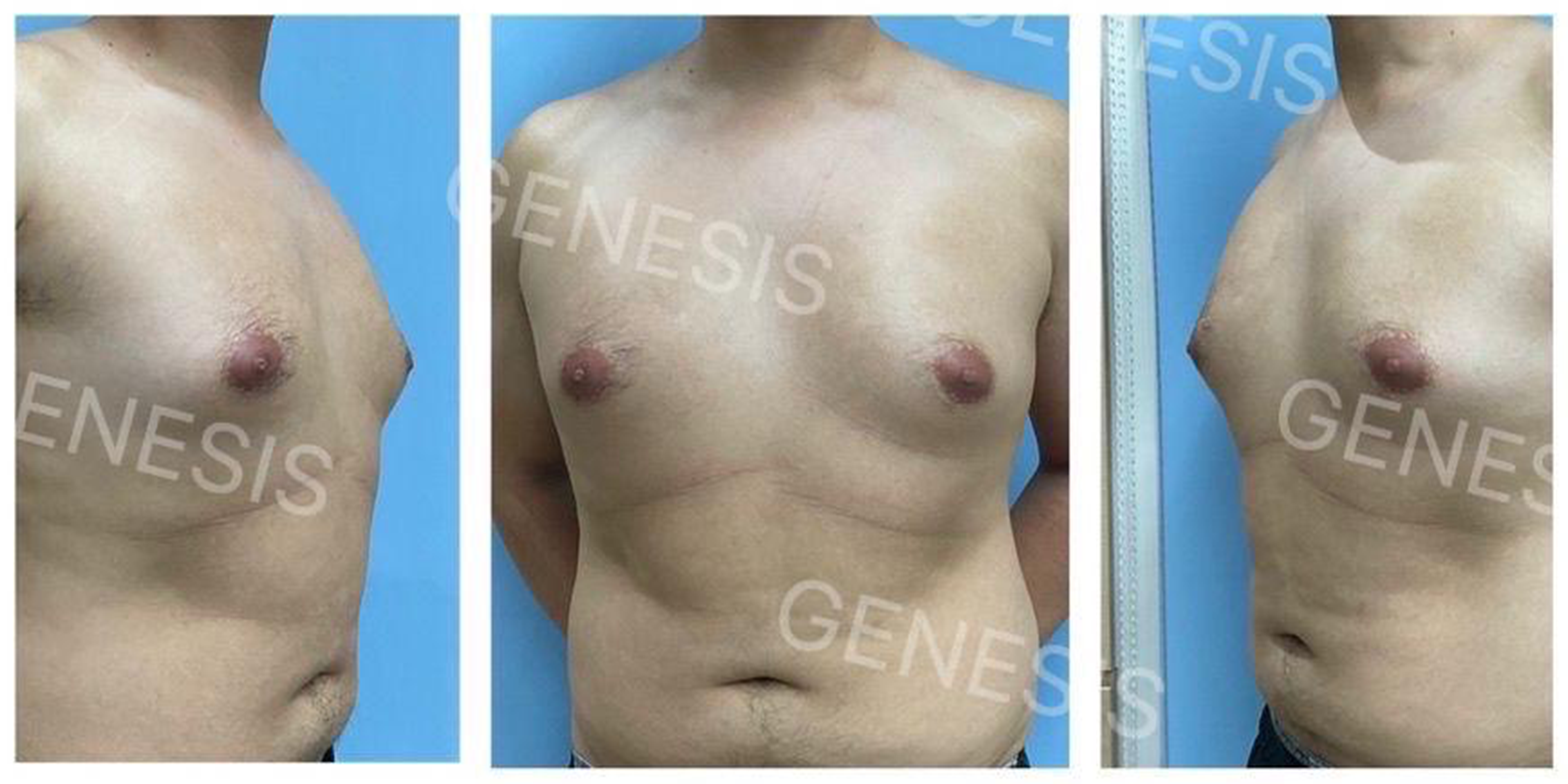
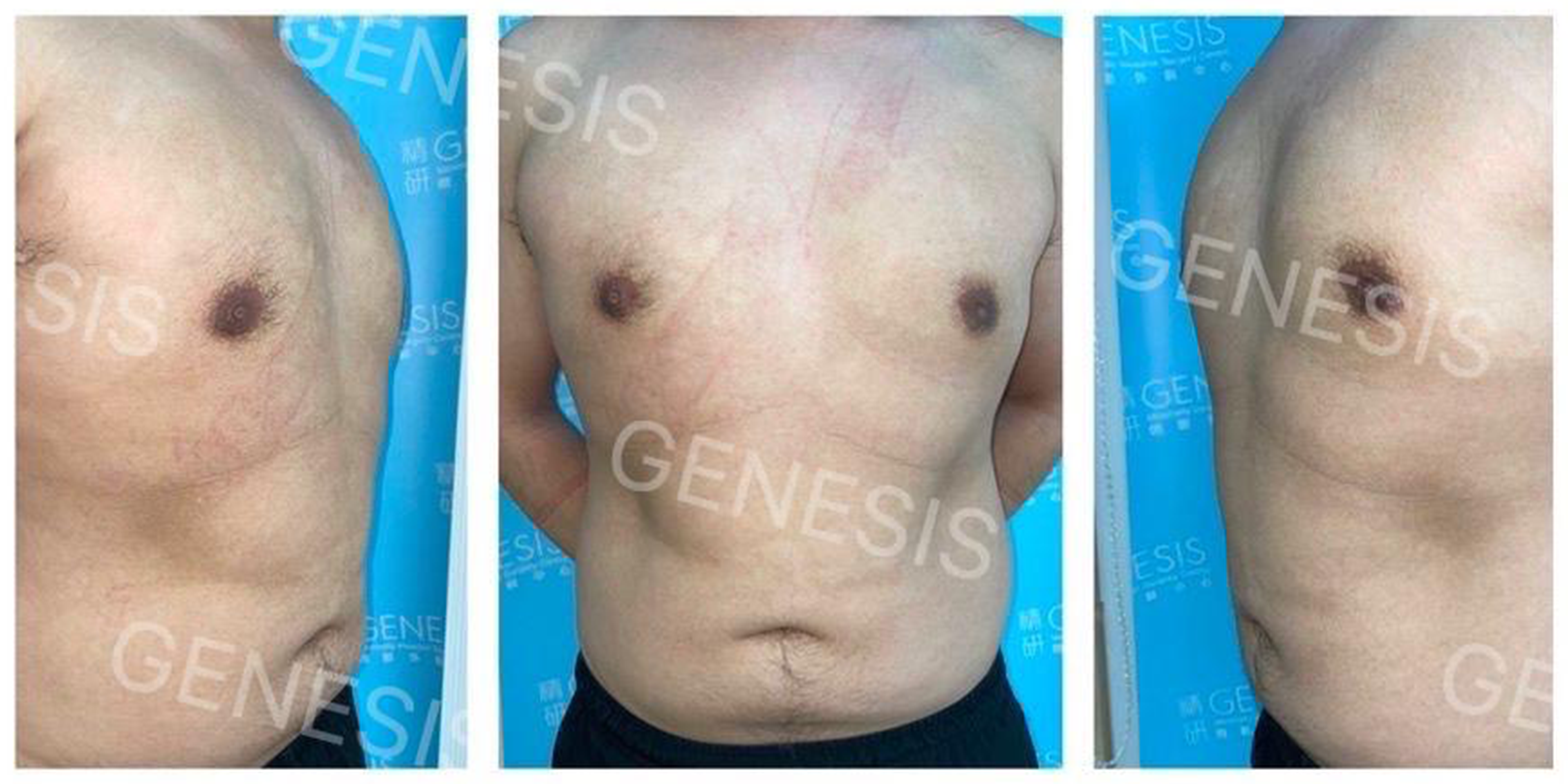
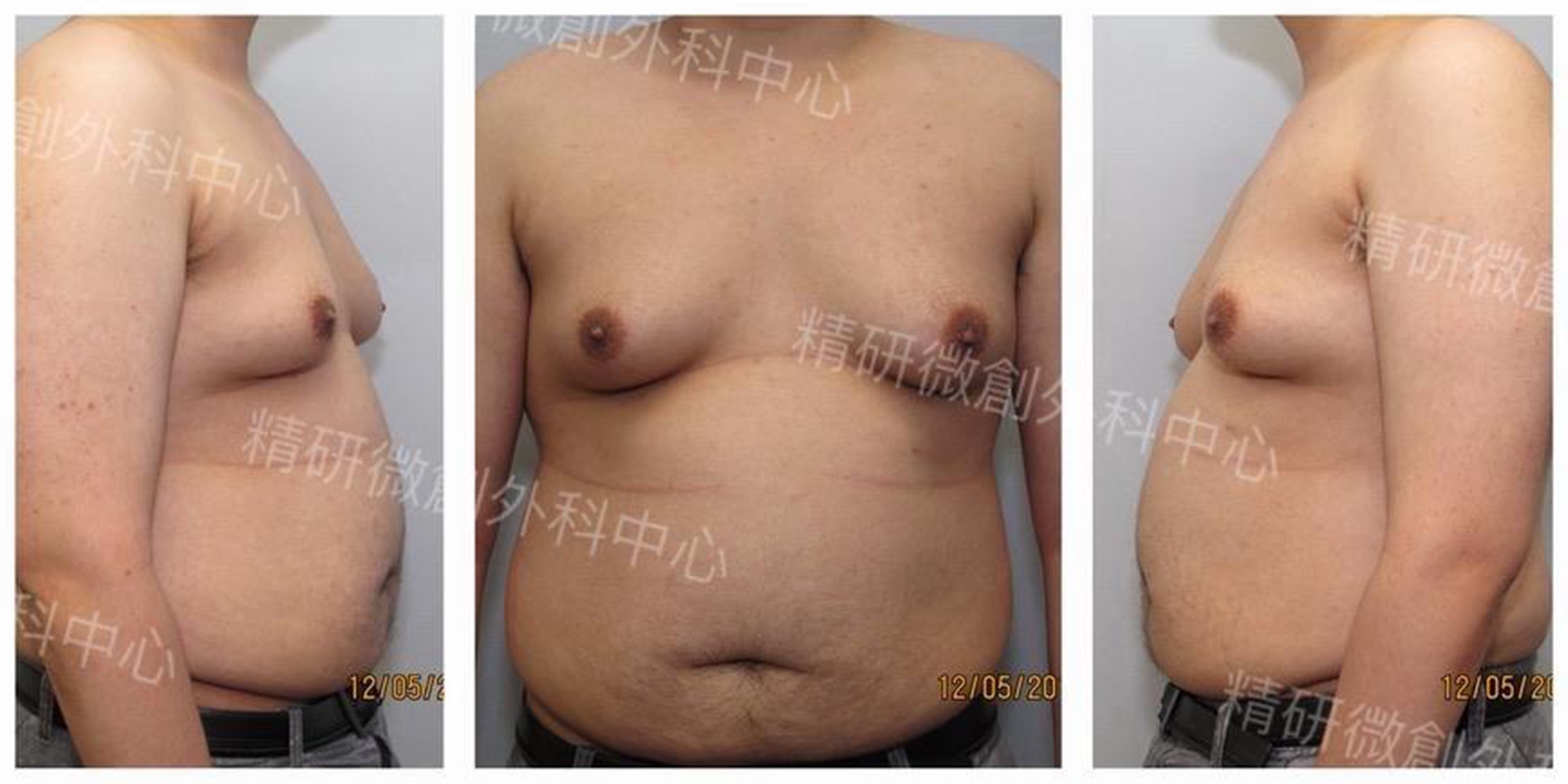
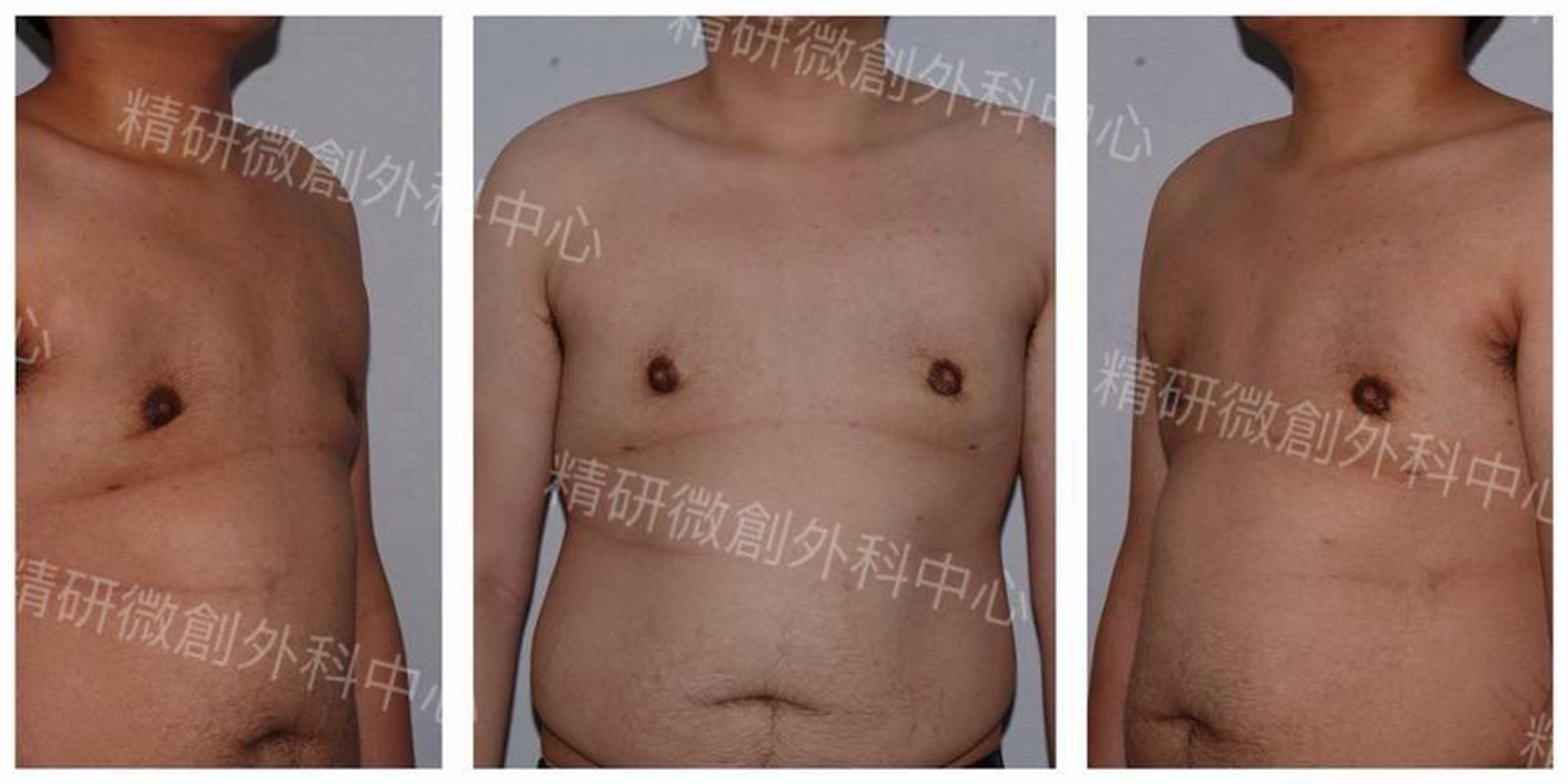
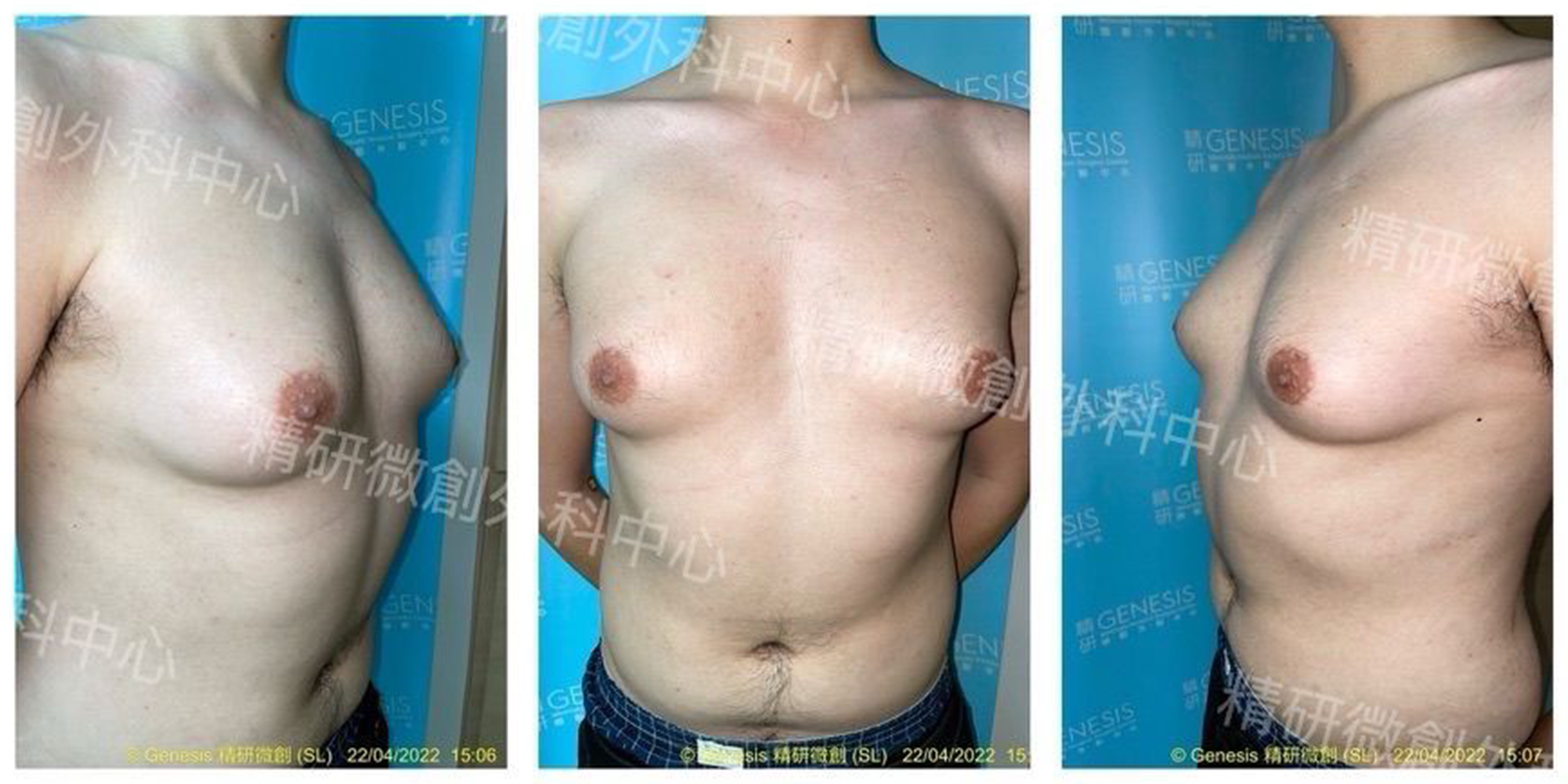
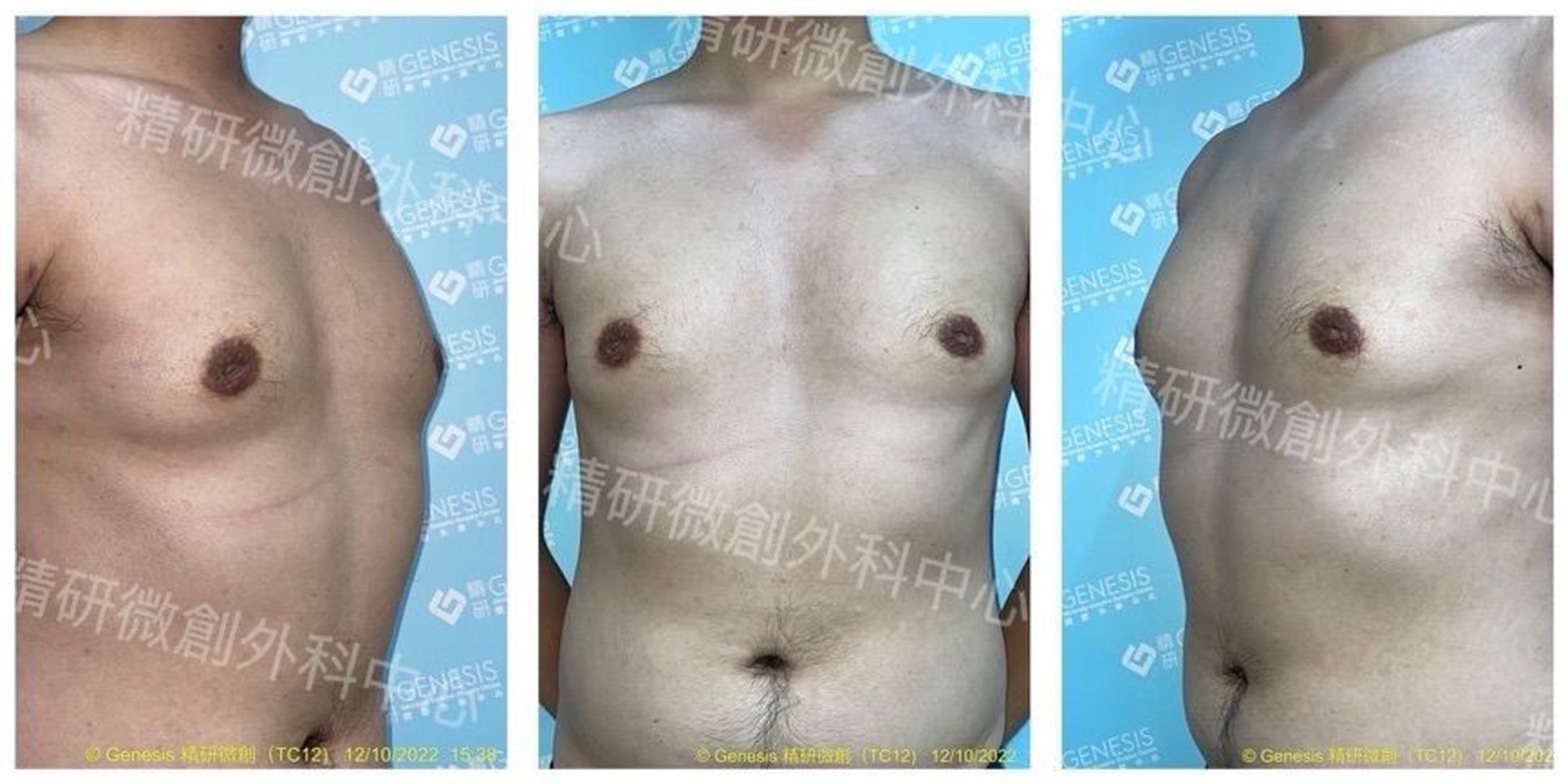
Fat-type (pseudo-gynecomastia): Mainly driven by fat accumulation. The chest feels soft to the touch. Liposuction is usually effective, resulting in minimal scarring and a quicker recovery.
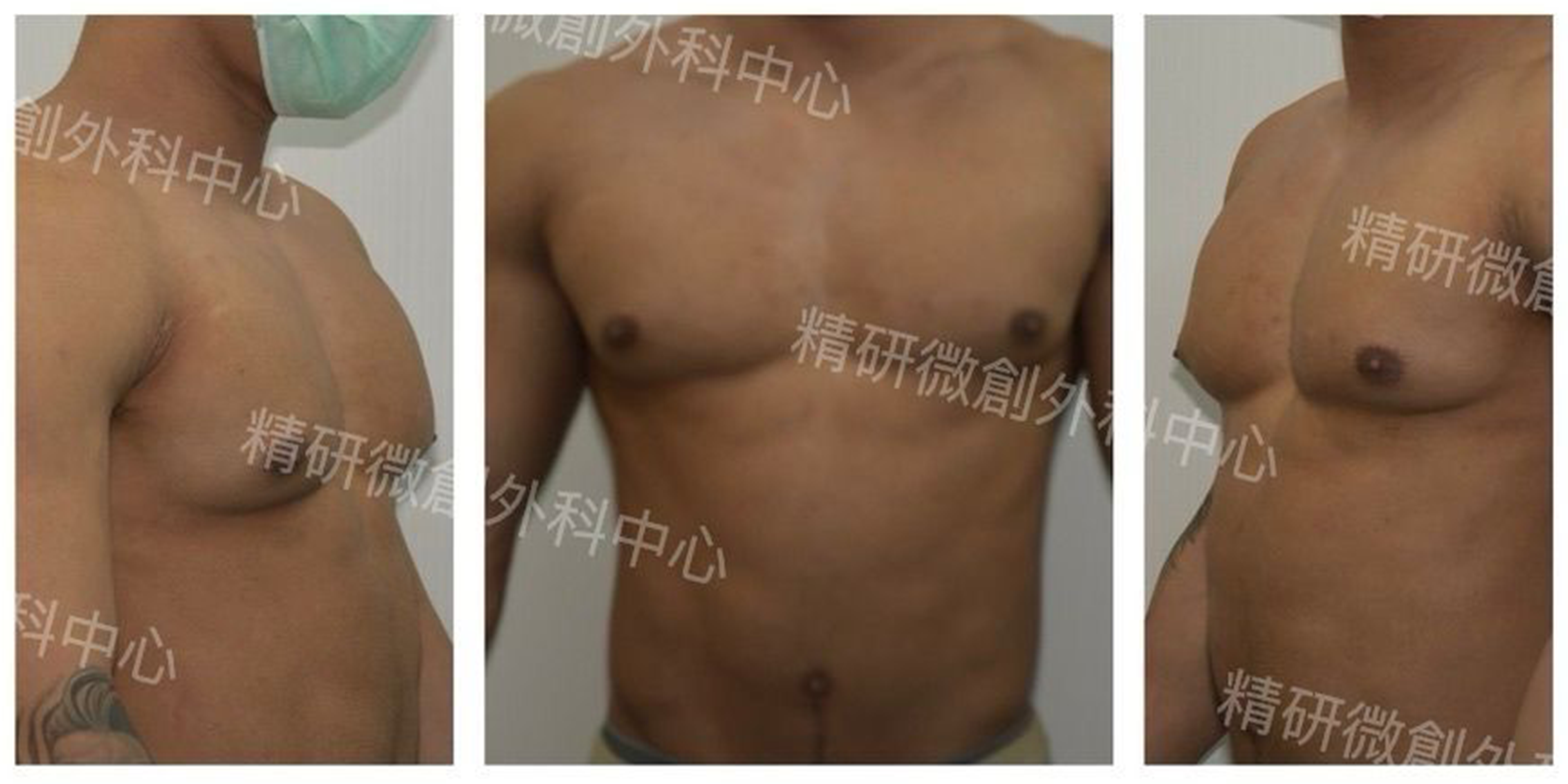
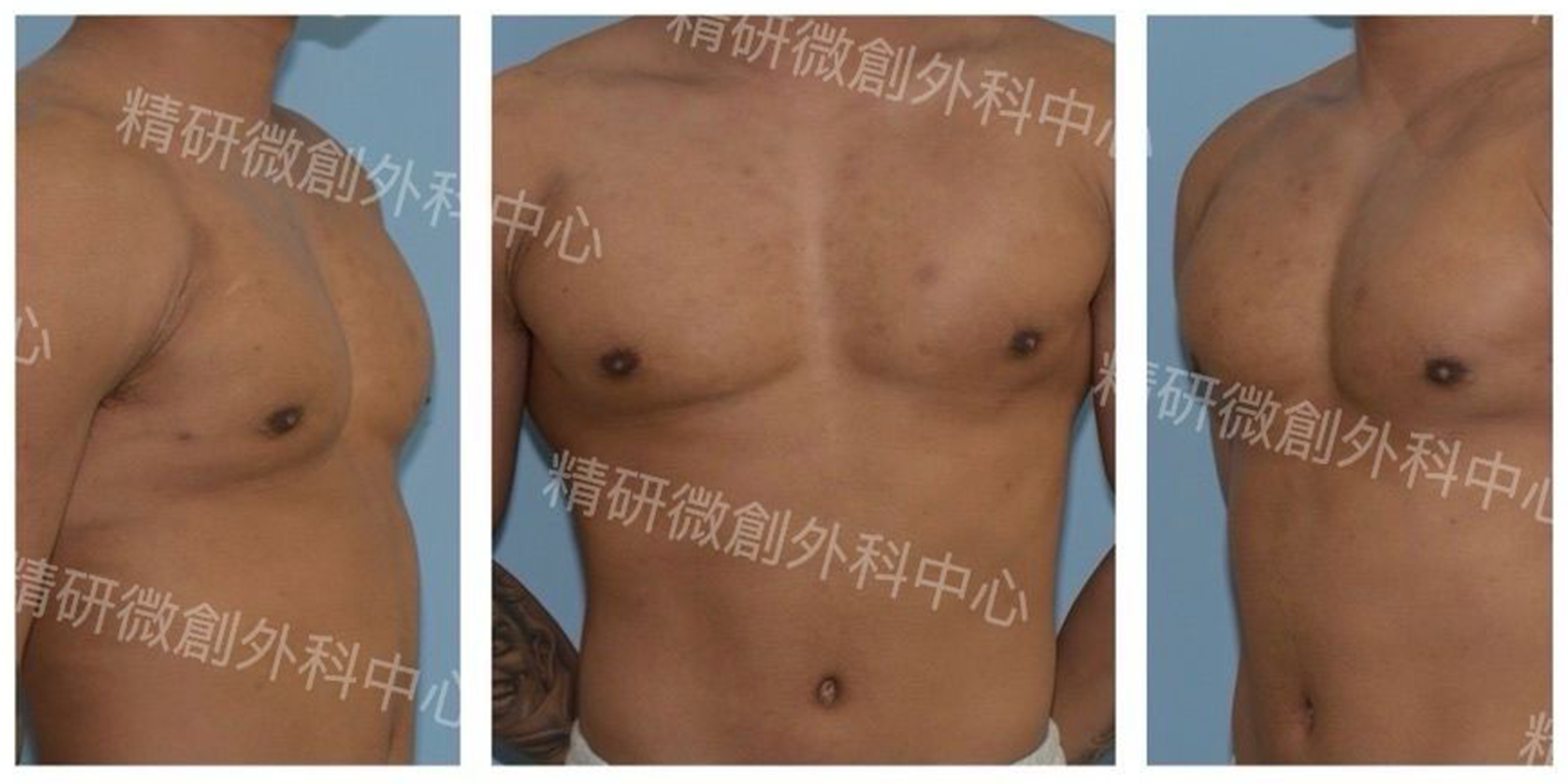
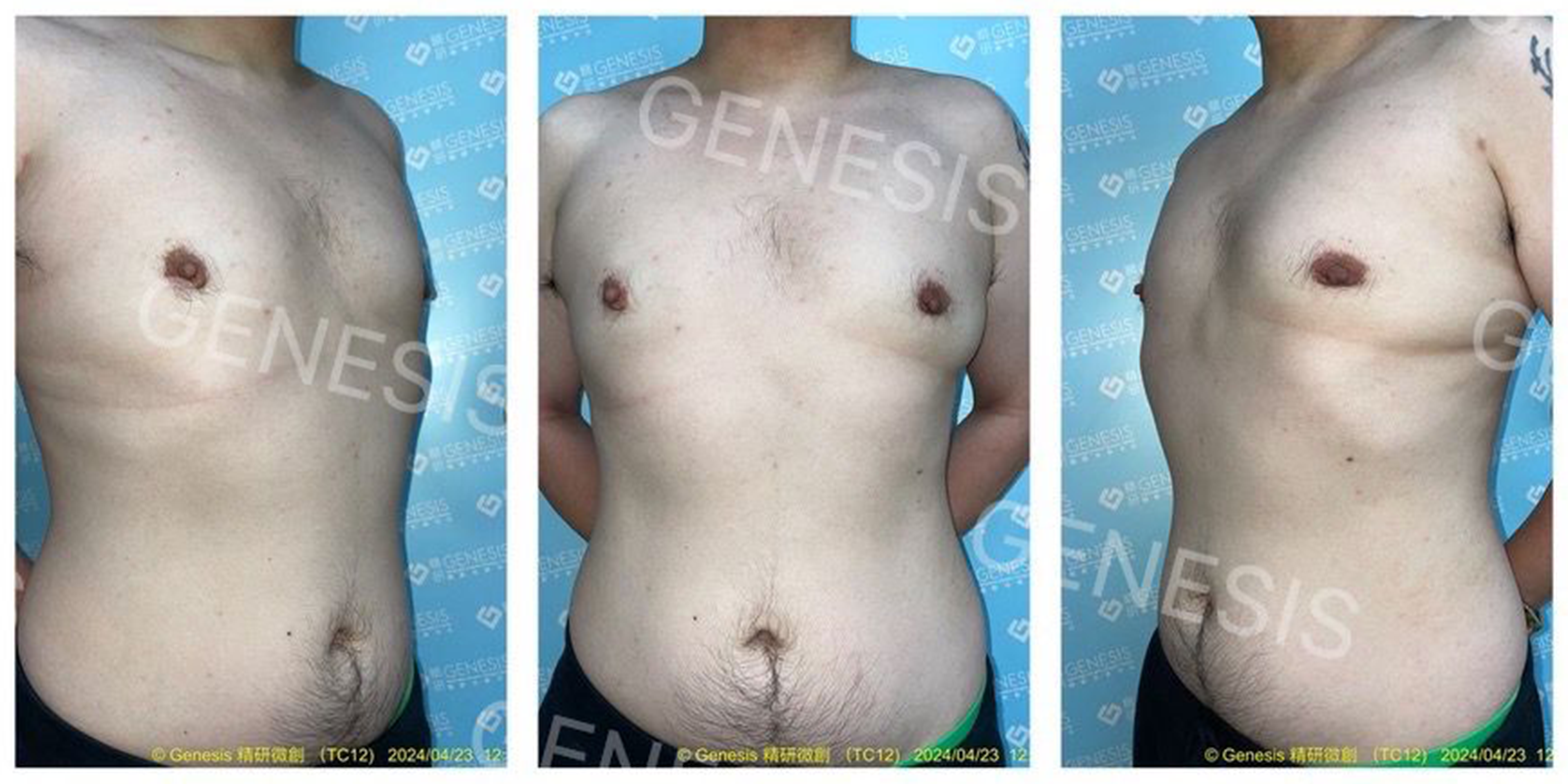
Gland-type: The chest feels firm due to glandular hyperplasia. Liposuction alone is often insufficient. Surgery involves a small incision at the areola border to excise the tissue.
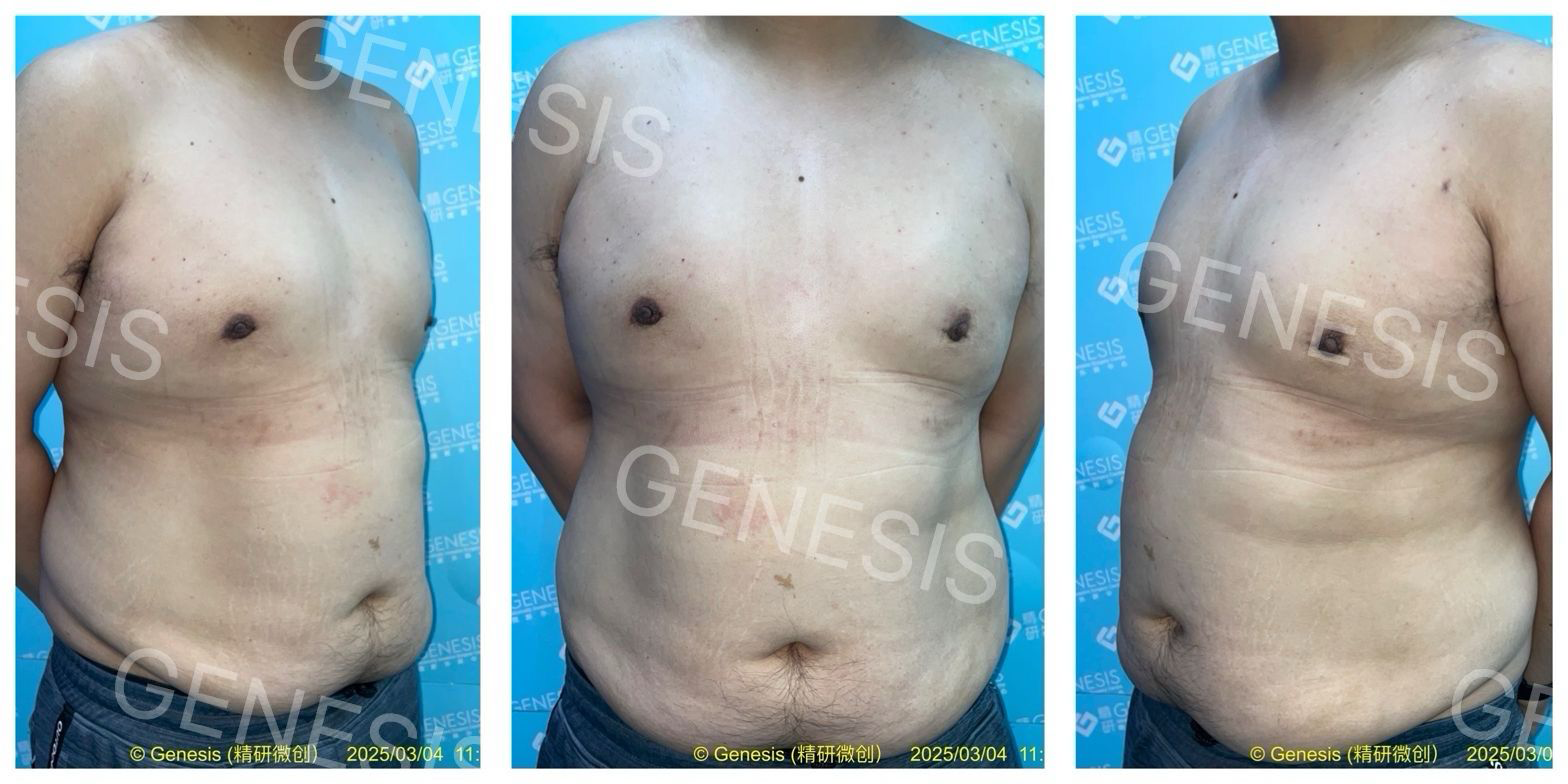
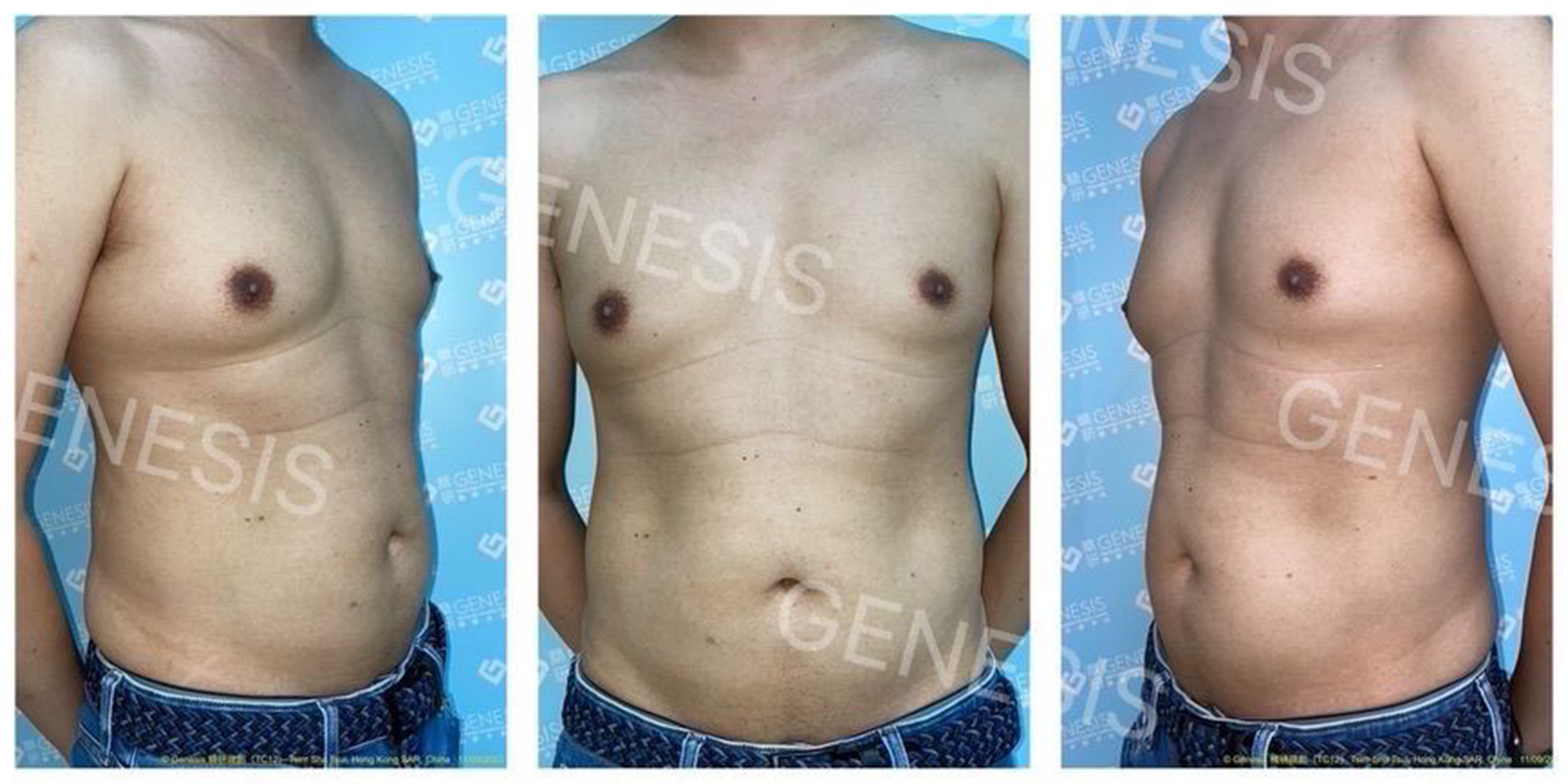
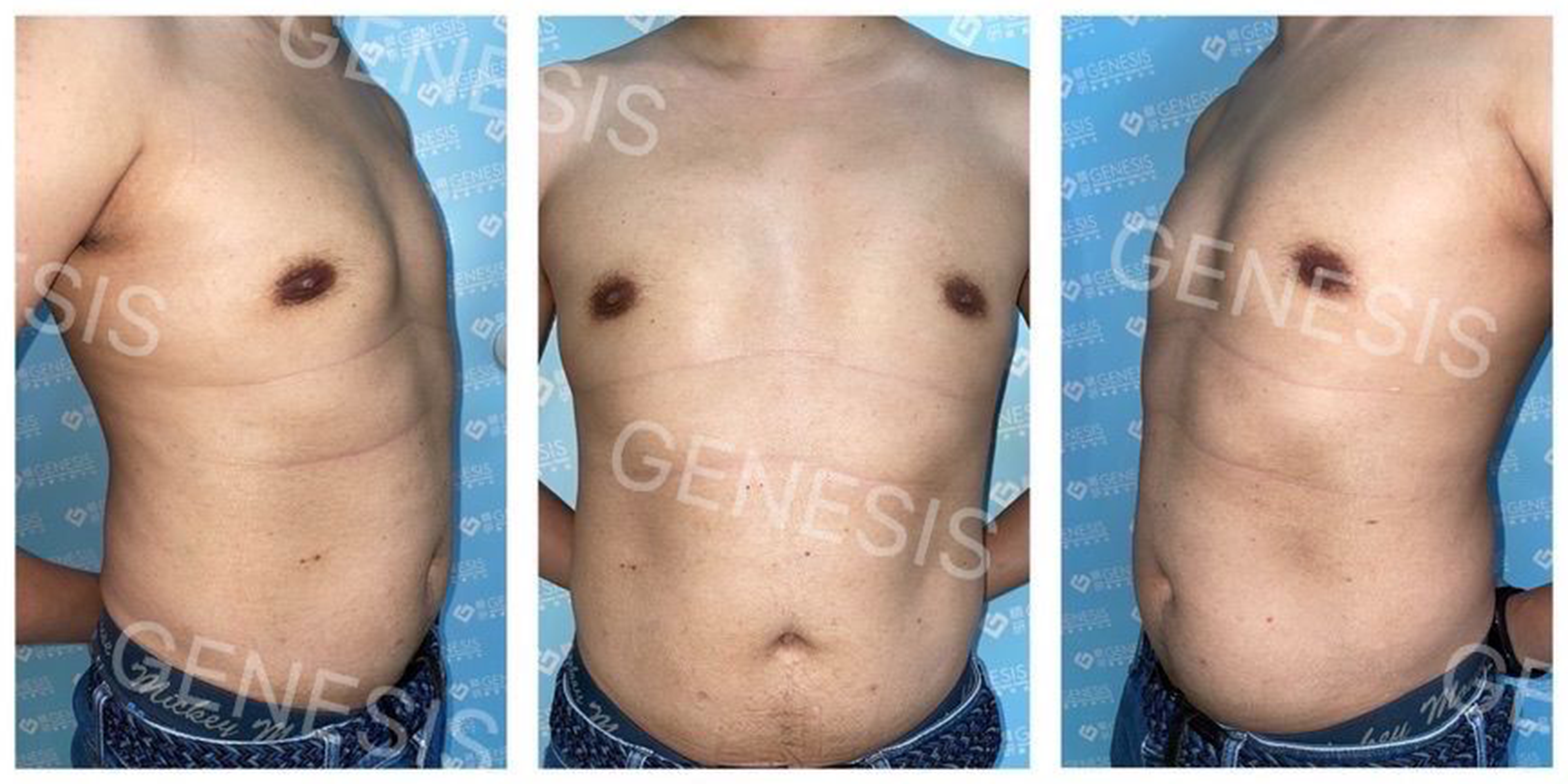
Mixed-type: The most common clinical presentation. Doctors typically combine liposuction with gland excision to achieve a flat, natural masculine contour.
* The images above are for reference only. The actual treatment outcomes depend on various factors.
Compression garment: To minimise swelling and the risk of hematoma, a specialised compression garment must be worn for the first 24 hours. It is generally recommended to continue wearing it for 1-4 weeks.
Drainage: In some cases, a small drain may be placed to remove fluid. The medical team will provide detailed instructions on how to manage this at home.
Activity: Normal daily activities can usually be resumed within 1-2 weeks. However, strenuous chest exercises (e.g. push-ups, bench press) should be avoided for 4 weeks to ensure proper healing.
Why Choose Genesis Surgery?
Experienced Team
Our centre focuses on minimally invasive treatments. Our team regularly exchanges expertise with international professionals to maintain high medical standards.
Patient Experience
We prioritise your comfort. We utilise various methods to reduce anxiety and discomfort during the procedure, including music, VR headsets, and vibration devices.
Professional Follow-Up
We provide comprehensive support, including pre-operative guidance, post-operative care instructions, and scheduled follow-up appointments.
Transparent Pricing
Our team provides clear fee structures upfront, allowing you to plan your budget before committing to treatment.
Free Preliminary Assessment
Whether you suspect you have gynecomastia or have been dealing with it for years, professional advice is the first step.
Contact us now for a free preliminary assessment to determine if treatment is
right for you.
Not necessarily. While obesity is a common factor, men with a normal build can develop it due to glandular hypertrophy or hormone imbalances. This is one reason a proper gynecomastia examination matters.
Incisions are strategically placed in discreet areas such as the armpit or along the areola border, making scars typically difficult to notice once healed.
Gynecomastia is generally a benign condition. However, a medical evaluation is recommended to rule out underlying hormonal issues or other health conditions.